


🇪🇸 ES · Spain · Chapter 3 of 7
The Madrid Scene: The Night that Lasted Ten Years (1979–1992)
Before the 1980s, Spaniards spent a good part of the century under the regime of dictator Francisco Franco. Forty years of conservative dictatorship had repressed sexuality, culture, political dissent, and freedom of expression. Franco died on November 20, 1975, and the democratic transition that followed was slow, negotiated, and sometimes painful.

But culture did not wait for politicians. Before the parties finished agreeing on the 1978 Constitution, something was already happening in the bars and basements of the Malasaña neighborhood in Madrid that no decree could order and no repression could stop: the explosion of a generation that had lived its adolescence under the dictatorship and its youth during the transition, with forty years of accumulated repression that needed to be released all at once.
The Movida was like an aesthetic big bang, a collective implosion of desire, boldness, and cheekiness that emerged after the long night of Francoism. It was the ecstatic adolescence of a nation that had just regained the right to dream in color after the dictatorship.
The Night of February 9, 1979
The concert in tribute to Canito — José Enrique Cano Leal, drummer of the pop band Tos, who died in a traffic accident — took place on February 9, 1979, and is often considered the event that solidified the Movida Madrileña. Alaska y Los Pegamoides, Mamá, Nacha Pop, and Mermelada participated. It was held at the College of Architects of Madrid, in front of an audience of initiates who that night felt they were witnessing something unprecedented in Spain.
It was not just a concert: it was the first sign that Spanish youth were not going to inherit their parents' culture but were going to invent their own, from scratch, with the materials they found available: British punk, David Bowie's glam, American new wave, ABBA's pop, and on top of all that, the specifically Madrilenian sensitivity — ironic, excessive, nocturnal, unafraid of ridicule.
Alaska: the queen of the night
Olvido Gara JovaAlaska — was born in Mexico City in 1963 and moved to Madrid as a child. By the time she was fifteen, she was already on stage with Alaska y los Pegamoides, the band that would become the sonic epicenter of the Movida in its purest phase.
Alaska was everything that Francoism had banned: excessive makeup, impossible colors, androgyny, black humor, the rejection of any solemnity. Her stage presence was a manifesto in itself, even before a single note was played.
The music of the Movida was bold, fresh, and often irreverent, blending genres like punk, pop, and rock, while addressing social issues and questioning established norms.
"A Quién Le Importa" — written by Alaska and composed by Nacho Canut and Carlos Berlanga, became the anthem of difference, of strangeness as pride, of those who live by their own rules without asking for permission. It is also one of the most powerful LGBTQ anthems in the history of Spanish pop, even though it never needed to declare itself as such.
Mecano: the perfect pop of the Caminero
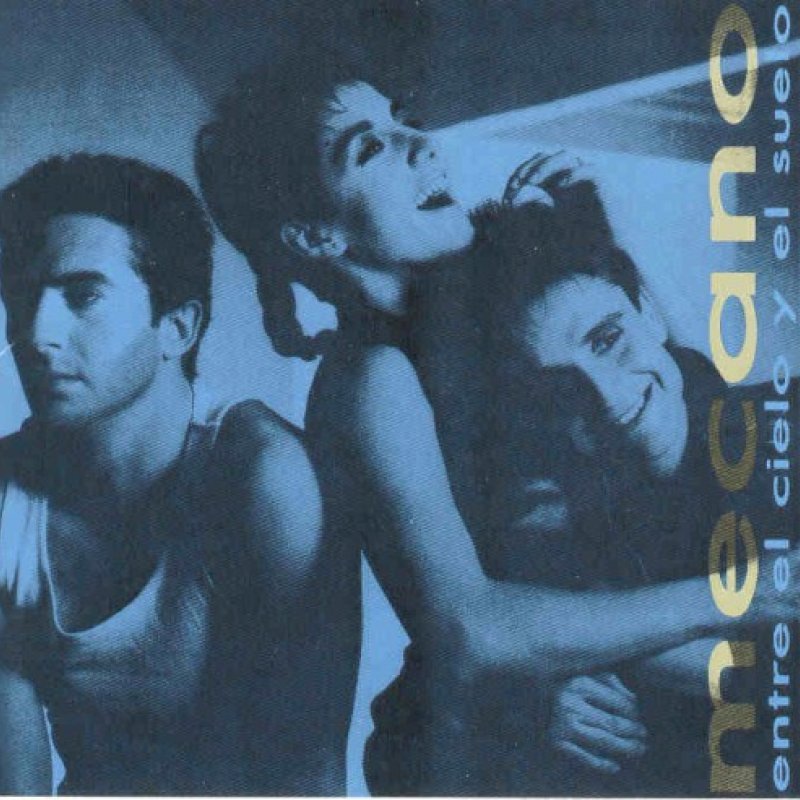
Nacho Caminero — and his sisters Ana and José María Caminero formed Mecano in Madrid in 1981. They were everything Alaska was not: accessible, melodic, perfect for the radio, capable of crafting pop songs with such calculated simplicity that it seemed natural.
Their catalog — "Me Colé en una Fiesta", "No me pidas esta noche que no puede ser", "Maquillaje", "Cruz de Navajas", "Hijo de la Luna" — is the repertoire of the Movida in its most massive version: the songs that sold millions of copies, that played on all the radios, that decades later are still the ones any person in Spain of a certain age knows by heart.
Ana Torroja — the voice of Mecano, with her inimitable timbre between a whisper and a declaration — is one of the most recognizable voices in Spanish pop. "Hijo de la Luna"Listen — was their ultimate ambition: a mythical story told in three minutes of pop with chamber music instrumentation that Spanish pop had never attempted before.
Radio Futura: the sophisticated evolution
If Alaska was the punk of the Movida and Mecano was the pop, Radio Futura was its future. Santiago Auserón and his companions started in the Movida and surpassed it: their musical trajectory was the most demanding and the most interesting of the entire generation, shifting from the Anglo-Saxon edge to the tropical rhythm without losing lyricism.
Radio Futura embodied the sophisticated evolution of the Movida, transcending its punk and new wave origins to become alchemists of mestizo pop.
"Escuela de Calor" — — was their most danceable hit and their clearest statement: the city in summer, the body that wants to move, the freedom regained with the urgency of someone who knows they arrived late. Radio Futura is considered the best Spanish group of the 1980s by many critics.
Pedro Almodóvar: Cinema as a Mirror
The Movida was not just music: it was a total phenomenon that included the cinema of Pedro Almodóvar, with its camp aesthetics and uninhibited eroticism.
Pedro Almodóvar — a man from La Mancha who had arrived in Madrid in the sixties to encounter the Movida when it came — was the artist who turned the spirit of that moment into works of art that the world could see. His early films Pepi, Luci, Bom and Other Girls on the Heap (1980), Labyrinth of Passion (1982) — captured the energy of the bars of Malasaña with the same intensity as Alaska's concerts, but in a format that could travel outside of Spain.
Before becoming a director, Almodóvar formed a musical duo with McNamara and recorded songs like "I'm Going to Be a Mom" — the irreverence of the Movida in its most direct and comedic form.
Almodóvar's cinema and the music of the Movida fed off each other for a whole decade, until the filmmaker reached the artistic maturity that would lead him to win the Oscar with All About My Mother (1999).
The End of the Movida: The Hangover
By the late 1980s, the Movida Madrileña was losing momentum as social and economic changes promoted new ideas. Commercialization — the same process that turned Mecano into a mass phenomenon — diluted the energy of a movement that had been born out of marginality and urgency.
Factors such as commercialization and audience fatigue contributed to the gradual dissolution of the movement. Time flew by until 1986, when the musicians and singers representing this golden era achieved commercial success. At that point, it ceased to make sense as a phenomenon and became a common brand.
Drugs — heroin especially — were the price many protagonists of the Movida paid for the intensity of those years. Lives cut short, careers interrupted, the dark side of the party that seemed to have no end.
But its legacy remains: the Movida established a cultural foundation that facilitated future artistic explorations in Spain and from the 2000s onwards returned through books, documentaries, reissues, and films.
Editorial Note: The Movida Madrileña had no manifesto or leader. As Almodóvar said: "We were not a generation; we were an artistic movement; we were not a group with a specific ideology. We were simply a bunch of people who coincided in one of the most explosive moments of the country." That lack of program — the absence of ideology, plan, intention to change the world — was exactly what gave the Movida its energy. Movements that want to change the world often end up betrayed by their own utopias. The Movida only wanted to live. And for ten years, it did so with an intensity that Spain had not known in forty years of dictatorship nor would know in the same way afterward.
10 · 0 en DoReSol
Top 10 of the Movida Madrileña
Who Cares
Alaska and Dinarama · 1986
The anthem of difference. Uniqueness as pride. The most powerful LGBTQ anthem of Spanish pop without needing to declare itself as such.
Son of the Moon
Mecano · 1986
The most ambitious song of Spanish pop in the 80s. Mythical story, chamber instrumentation, the voice of Ana Torroja.
School of Heat
Radio Futura · 1984
The most danceable Movida. The city of Madrid in summer turned into rhythm.
Cross of Daggers
Mecano · 1986
The most cinematic love and crime story of Spanish pop. Mecano in its maximum narrative ambition.
Movida en el Oasis
Alaska y los Pegamoides · 1982
The punk pop of the Movida in its most direct form. Alaska at seventeen already being what she would always be.
El Canto del Loco
Radio Futura · 1980
The beginning. The song that established the vocabulary of Radio Futura before the Movida had a name.
Me Colé en una Fiesta
Mecano · 1982
Mecano's first big hit. The most accessible pop of the Movida in its most carefree version.
El Rey del Glam
Tino Casal · 1987
The David Bowie of the Movida. Tino Casal taking glam further than any other Spanish artist.
Chica de Ayer
Nacha Pop · 1980
The nostalgia of the Movida before the Movida existed. The most emotional song of a movement that proclaimed itself without sentimentality.
The Statue in the Botanical Garden
Radio Futura · 1983
Radio Futura at its most poetic moment. Santiago Auserón demonstrating that Spanish rock could also be literature.
2 canciones · en DoReSol
Practice these songs on Doresol
The full series
Spain
Flamenco, copla, Madrid scene, Spanish rock. The crossroads of Gypsy and Arab.
-
CAP 01
🇪🇸 Ch 01
The Roots and Flamenco: The Duende Was Born Here (15th Century–1900)
Before Spain existed as a nation, the territory it occupies today was for centuries the meeting point — and point of conflict — between three great civilizations of the Mediterrane
-
CAP 02
🇪🇸 Ch 02
The Flamenco Revolution: Camarón, Paco de Lucía and the Electric Duende (1960–1992)
When Paco de Lucía first saw Camarón de la Isla, he was seventeen years old. Paco was working on a recording in Madrid. Camarón, then a young singer from San Fernando, appeared at
-
CAP 03 you are here
🇪🇸 Ch 03
The Madrid Scene: The Night that Lasted Ten Years (1979–1992)
Before the 1980s, Spaniards spent a good part of the century under the regime of dictator Francisco Franco. Forty years of conservative dictatorship had repressed sexuality, cultur
-
CAP 04
🇪🇸 Ch 04
Spanish Rock: Héroes del Silencio and the Great Anomaly (1985–2000)
There was something strange about Héroes del Silencio from the beginning, something that made them difficult to place on the map of Spanish rock. They weren't from Madrid — they ca
-
CAP 05
🇪🇸 Ch 05
Spanish Pop and Alejandro Sanz: The Voice of Latin America (1990–today)
There is something about Spanish pop from the nineties that no market analysis can fully explain: its ability to conquer Latin America with a depth and permanence that is unprecede
-
CAP 06
🇪🇸 Ch 06
The Copla and the Songbook: The Voice of Deep Spain (1920–1975)
The poet Manuel Machado wrote what could be the best epitaph for the Spanish copla: "Until the people sing them, the coplas are not coplas, and when the people sing them, no one kn
-
🇪🇸 Ch 07
The Singer-Songwriter: Serrat, the Nova Cançó and the Poetic Resistance (1960–present)
Francoism prohibited the public use of Spain's vernacular languages: Catalan, Basque, Galician, and Valencian were confined to the private sphere for forty years, while Castilian w
You might also like
3 articles picked by editorial similarity


