


🇪🇸 ES · Spain · Chapter 7 of 7
The Singer-Songwriter: Serrat, the Nova Cançó and the Poetic Resistance (1960–present)
Francoism prohibited the public use of Spain's vernacular languages: Catalan, Basque, Galician, and Valencian were confined to the private sphere for forty years, while Castilian was proclaimed the only official language of a "one, great, and free" Spain. In that context of linguistic repression, singing in Catalan was a political act before being an artistic one.

The Nova Cançó — "the new song" in Catalan — was born in Barcelona in the sixties as a cultural response to that repression: singer-songwriters who took the model of the French chanson (Brassens, Brel, Aznavour) and applied it to the Catalan language and reality. It was not separatism or independence: it was simply the affirmation that Catalan was a language in which beautiful, complex, and true songs could be written.
From this movement emerged the most important artist that Spain has produced in singer-songwriter music: Joan Manuel Serrat.
Joan Manuel Serrat: the son of the Mediterranean
Joan Manuel Serrat was born on December 27, 1943, in the Barcelona neighborhood of Poble-sec, the son of a Catalan father and an Aragonese mother — the synthesis of the two Spains in one house, the two languages in one child.
On May 14, 1965, at the French chapel in Barcelona, a festival of the nova cançó catalana discovered a new singer-songwriter who was the most applauded of the program. It was the first concert of a young Barcelona student of Industrial Mastery who had discovered the song during a recital of new Catalan singer-songwriters.
Serrat emerged as a singular voice at a historical moment characterized by the cultural repression of Francoism, systematic censorship, and the prohibition of the public use of vernacular languages. His artistic career represents not only a successful musical career but fundamentally an aesthetic and political project of cultural vindication, dignification of popular memory, and peaceful resistance against the cultural homogenization imposed from power.
He decided to sing in both languages — Catalan and Spanish — without hierarchy between them, with the naturalness of someone who grew up moving between the two worlds without seeing any contradiction in it.
Mediterranean: Spain's Most Voted Song
In 1971, Serrat released the album Mediterráneo — a work that critics and the public would progressively recognize as the greatest document of Spanish singer-songwriter music of the 20th century.
The title song — "Mediterráneo" — is exactly what its title promises: a song to the Mediterranean Sea that is simultaneously autobiography, sentimental geography, and a declaration of identity. "What can I do, if I was born in the Mediterranean" — the acceptance of origin as destiny, with the serenity of someone who knows it cannot be otherwise and does not want it to be.
In 2004, it was chosen by popular vote as the best song in the history of popular music in Spain, in a TVE program. It was also chosen as the best Spanish pop song by Rolling Stone in 2010.
Serrat may have composed the song during the time he was locked in the Monastery of Montserrat, along with other artists, as a protest against the Burgos Trial, in late 1970.
The literary sophistication of its lyrics, which incorporate cultured references without losing accessibility, contrasts with the melodic simplicity of many of his compositions, creating a balance that explains its ability to connect with very diverse audiences.
Serrat and the poets
One of the most extraordinary decisions in Serrat's career was to set to music the great Spanish poets of the 20th century — Antonio Machado, Miguel Hernández, Federico García Lorca, Rafael Alberti, Mario Benedetti — bringing poetry to an audience that did not read poetry and demonstrating that song and poetry are not separate genres but different points of the same continuum.
His album dedicated to Antonio Machado (1969) — with songs like "Cantares" and "La Saeta" — was the first in that series and remains the most impactful: Serrat's voice turning the verses of the Castilian poet into something that anyone who spoke Spanish could feel as their own, regardless of whether they had read Machado.
His album dedicated to Miguel Hernández (1972) was recorded when the poet was still officially on the Francoist index — banned, silenced, the poet who had died in the regime's prison. Releasing that album was an act of cultural bravery whose consequences Serrat assumed without drama.
La Nova Cançó: the other pioneers
The movement that Serrat represented in its most massive dimension had other equally important protagonists.
Lluís Llach — from Barcelona, politically committed in a more explicit way than Serrat — composed "L'Estaca" (1968), the song that would become the anthem of the anti-Franco resistance in Catalonia and that decades later Lech Wałęsa would cite as an inspiration for the Solidarity movement in Poland. A Catalan song becoming a symbol of resistance in Eastern Europe: music as a universal language of resistance.
Maria del Mar Bonet — from Mallorca, the greatest female voice of the Nova Cançó — built a career of cultural breadth that connected the traditional repertoire of the Balearic Islands with the Arabic music of the Mediterranean, Andalusian flamenco, and Catalan singer-songwriter music.
The Castilian Singer-Songwriter: Aute and Sabina
In Castilian, the genre produced its own figures that complemented the universe of the Nova Cançó with different sensibilities.
Luis Eduardo Aute — Cuban-Filipino born in Manila, trained in Spain — was the most cinematic singer-songwriter of the genre: his songs had the narrative structure and visual density of film scripts, with lyrics that built specific situations before reaching the general emotion.
Joaquín Sabina — from Jaén, exiled in London during Franco's regime, returned to become the most incisive chronicler of democratic Spain — mixed the singer-songwriter style with rock, humor, and urban customs, to produce one of the richest and most beloved catalogs of contemporary Spanish popular music.
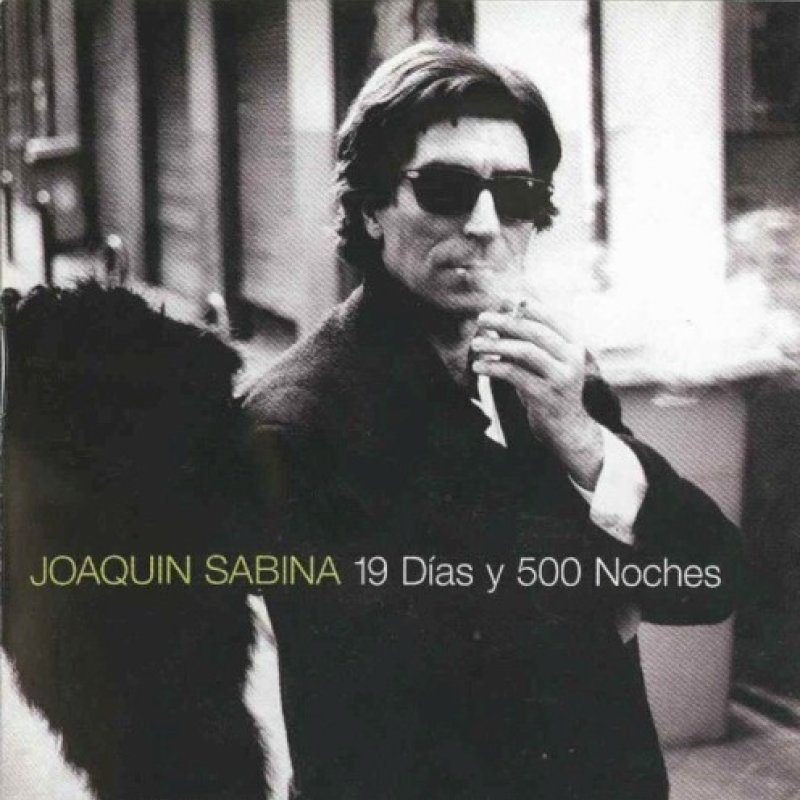
His song "19 Días y 500 Noches"Listen — is Spanish pop-rock in its most narrative form: the story of a breakup told with the precision of a novelist and the urgency of a lover who has not yet digested what happened.
The Legacy
The Spanish singer-songwriter tradition — from the Nova Cançó of the sixties to Sabina's pop in the 21st century — demonstrates that both Spanish and Catalan are languages that can encompass the highest poetry and the most popular song, without contradiction.
Serrat announced his retirement from the stage in 2022, with a farewell tour that traveled through Spain and Latin America. The singer-songwriter from Poble-sec, who had sung in his childhood neighborhood at the age of twenty, who had brought Antonio Machado and Miguel Hernández to the lips of millions, who had sung in Catalan when it was forbidden and in Spanish when no one wanted to listen to the Catalan who tried, ended his career standing, with the Mediterranean behind and the audience in front, exactly where he had always been.
Editorial Note: Joan Manuel Serrat was chosen to represent Spain in the 1968 Eurovision Song Contest. When the time came to sing, he announced that he would do so in Catalan — not in Spanish as the regime expected. Spain withdrew him from the competition and sent another singer. Serrat lost Eurovision and gained something much more important: the credibility of someone who puts their convictions before their career. Decades later, that decision seems obvious. In 1968, in the midst of the Franco dictatorship, it was an act of bravery that could have very serious consequences. Serrat knew it. And he did it anyway. That too is a song.
10 · 1 en DoReSol
Top 10 of Spanish Singer-Songwriter Music
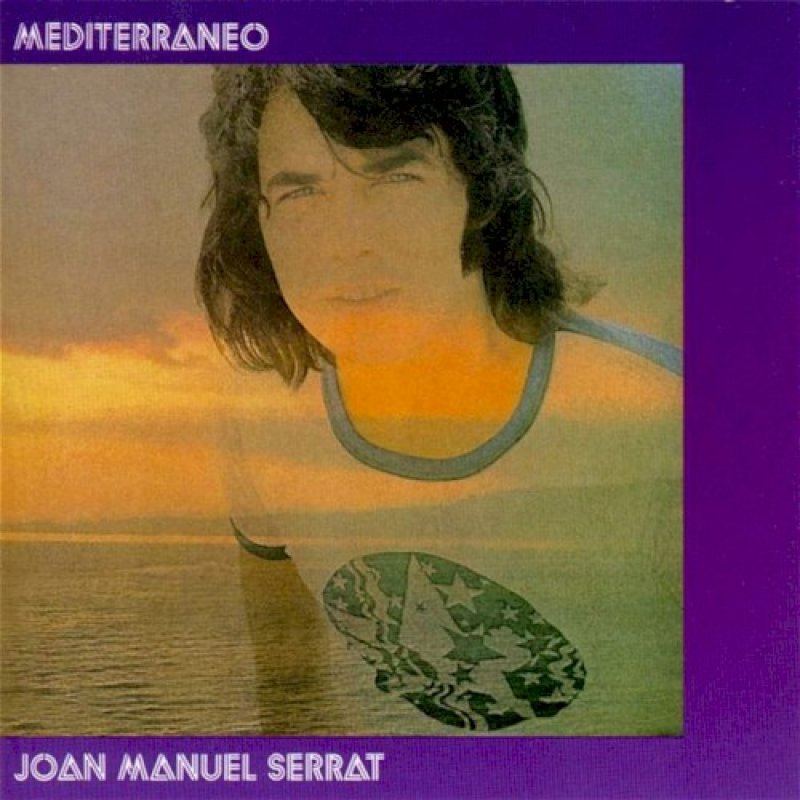
Mediterráneo
Joan Manuel Serrat · 1971
The best song in the history of popular music in Spain according to popular vote. The Mediterranean as identity, memory, and return.
L'Estaca
Lluís Llach · 1968
The anti-Franco anthem that Lech Wałęsa cited as inspiration for the Polish Solidarity movement. The Catalan resistance that became universal.
Cantares
Joan Manuel Serrat (poems by Antonio Machado) · 1969
Serrat bringing Machado to the people. Cultured poetry turned into song without losing either.
19 Days and 500 Nights
Joaquín Sabina · 1999
The romantic breakup narrated with novelistic precision. Sabina as the most incisive chronicler of democratic Spain.
La Saeta
Joan Manuel Serrat · 1969
Machado by Serrat in his most political version. The saeta as a metaphor for resistance against the established order.
Peces de Ciudad
Joaquín Sabina · 1987
Sabina's urban rock in its first great form. Madrid as the territory of the singer-songwriter.
Si te Quedas Con las Ganas
Luis Eduardo Aute · 1985
The most cinematic love song from Spain's most visual singer-songwriter. Aute constructing situations before naming emotions.
El Tren de Madera
Lluís Llach · 1979
The post-civil war seen by the son of the defeated. Llach being the poet of historical memory that Spain took decades to allow itself.
Princess
Joaquín Sabina · 1985
Madrid prostitution turned into a story of dignity. Sabina looking without sentimentality at the woman society preferred not to see.
The Legend of Time
Maria del Mar Bonet · 1991
The Arab and Catalan Mediterranean in the voice of the greatest female singer of the Nova Cançó.
1 canción · en DoReSol
Practice these songs on Doresol
Closing of the Spain Series
With this chapter, the Musical Spain Series by Doresol comes to an end: seven articles, seven worlds — the origins of flamenco, the revolution of Camarón, the explosion of the Movida, the rock of Héroes del Silencio, the pop of Alejandro Sanz and Rosalía, the post-war copla, and the singer-songwriter music of Serrat and Sabina.
*Spain is the only country in the world with a musical tradition declared a World Heritage (flamenco) that in the 21st century has also produced the most internationally recognized artist of her generation (Rosalía). That continuity between the roots and the future — between the duende of Jerez and the beats of El Mal Querer — is the story of all Spanish music: a centuries-long conversation that is still ongoing.*
Next series: Dominican Republic.
End of Series · Spain
With this chapter we close the 7-part series on Spain. Thanks for reading.
The full series
Spain
Flamenco, copla, Madrid scene, Spanish rock. The crossroads of Gypsy and Arab.
-
CAP 01
🇪🇸 Ch 01
The Roots and Flamenco: The Duende Was Born Here (15th Century–1900)
Before Spain existed as a nation, the territory it occupies today was for centuries the meeting point — and point of conflict — between three great civilizations of the Mediterrane
-
CAP 02
🇪🇸 Ch 02
The Flamenco Revolution: Camarón, Paco de Lucía and the Electric Duende (1960–1992)
When Paco de Lucía first saw Camarón de la Isla, he was seventeen years old. Paco was working on a recording in Madrid. Camarón, then a young singer from San Fernando, appeared at
-
CAP 03
🇪🇸 Ch 03
The Madrid Scene: The Night that Lasted Ten Years (1979–1992)
Before the 1980s, Spaniards spent a good part of the century under the regime of dictator Francisco Franco. Forty years of conservative dictatorship had repressed sexuality, cultur
-
CAP 04
🇪🇸 Ch 04
Spanish Rock: Héroes del Silencio and the Great Anomaly (1985–2000)
There was something strange about Héroes del Silencio from the beginning, something that made them difficult to place on the map of Spanish rock. They weren't from Madrid — they ca
-
CAP 05
🇪🇸 Ch 05
Spanish Pop and Alejandro Sanz: The Voice of Latin America (1990–today)
There is something about Spanish pop from the nineties that no market analysis can fully explain: its ability to conquer Latin America with a depth and permanence that is unprecede
-
CAP 06
🇪🇸 Ch 06
The Copla and the Songbook: The Voice of Deep Spain (1920–1975)
The poet Manuel Machado wrote what could be the best epitaph for the Spanish copla: "Until the people sing them, the coplas are not coplas, and when the people sing them, no one kn
-
🇪🇸 Ch 07
The Singer-Songwriter: Serrat, the Nova Cançó and the Poetic Resistance (1960–present)
Francoism prohibited the public use of Spain's vernacular languages: Catalan, Basque, Galician, and Valencian were confined to the private sphere for forty years, while Castilian w
You might also like
3 articles picked by editorial similarity


