


🇨🇺 CU · Cuba · Chapter 6 of 6
The Buena Vista Social Club and the 21st Century: When the World Rediscovered Cuba (1996–present)
In March 1996, British producer Nick Gold traveled to Havana with an ambitious plan: to record a collaborative album between Cuban musicians and Malian musicians, with American guitarist Ry Cooder as a bridge. The plan failed before it even started. A visa issue prevented the Malian musicians from arriving, and Gold and Cooder found themselves in Havana with the EGREM studios booked, the equipment ready, and no defined project.

What they did next, with the help of Cuban musician and producer Juan de Marcos González, was to go out and look for musicians. Not trendy musicians, but musicians from another era: the soneros, boleristas, and guitarists who had built Cuban music in the thirties, forties, and fifties, and whom the Revolution, time, and oblivion had left on the sidelines. Some were no longer performing. One of them, pianist Rubén González, had joints so deteriorated by arthritis that his colleagues doubted if he could play. Another, singer Ibrahim Ferrer, had spent the last years shining shoes on the streets of Havana.
The sessions were recorded in six days at the EGREM studios, the same studios where RCA Victor had recorded the greats of Cuban music in the fifties. The equipment and atmosphere of the place had not changed since then. The album that came out of those sessionsBuena Vista Social Club, released in June 1997 by the World Circuit label — sold more than eight million copies, won the Grammy for Best World Music Album in 1998, and became one of the most influential albums of the second half of the 20th century.
Nobody saw it coming. Not even Ry Cooder, who was the first to recognize it.
The protagonists: a generation that returned from oblivion
The Buena Vista Social Club was, above all, the rediscovery of a generation of musicians that the world — and to a large extent Cuba itself — had forgotten.
Compay Segundo — Francisco Repilado Muñoz, born in Siboney, Santiago de Cuba, in 1907 — was the oldest musician in the project: he was eighty-nine years old when the album was recorded. He had been a top-tier troubadour and guitarist in the thirties and forties, but the Revolution had left him without his natural work context. He had been playing in increasingly smaller circles for decades when Juan de Marcos González found him. His song "Chan Chan" — a composition of simple structure and inexhaustible beauty that Segundo himself claimed to have literally dreamed — opens the album and is his most well-known piece. When asked what he wanted to do with his newfound fame, Segundo replied that he wanted to have more children. He was ninety years old. He died in Havana in 2003, at the age of ninety-five, after having played at Carnegie Hall in New York, in Amsterdam, in Tokyo, and on the world's main stages.
Ibrahim Ferrer — born in San Luis, Santiago de Cuba, in 1927 — was the most gifted bolero and son singer of his generation and at the same time the most unknown outside of Cuba. He had sung for decades as a backup singer in different ensembles, never as the lead. When Juan de Marcos González found him for the sessions, Ferrer was retired and wanted nothing to do with music. They convinced him. When he arrived at the studio, the musicians started playing "Candela" to welcome him, and Ferrer began to sing from memory, improvising the verses, with a voice that left everyone speechless. His solo album Buena Vista Social Club Presents Ibrahim Ferrer (1999) was one of the ten best-selling albums in the United States that year. He won the Grammy for Best Traditional Tropical Music Album in 2000, when Ferrer was seventy-three years old — the first time in his life he won a Grammy. He died in Havana in 2005.
Rubén González — a pianist from Matanzas born in 1919 — was the most technically skilled musician in the group and the one who had gone the longest without recording. Arthritis had deformed his fingers to the point where his own colleagues doubted he could sit at the piano. When he did, the music that came out was perfect. He died in 2003.
Omara Portuondo — The Bride of Feeling, protagonist of the bolero chapter of this series — was the female voice of the project and the only major survivor of that original core still active in the 21st century, releasing albums and performing live at an age that defies any statistics.
Eliades Ochoa — a guitarist and singer from Santiago, a direct heir to the troubadour tradition of eastern Cuba — brought to the project the most direct connection with the root Cuban son. His wide-brimmed hat and seven-string guitar became one of the visual icons of the phenomenon.
Wim Wenders and the Oscar That Wasn't
In 1998, the German director Wim Wenders — the same who had filmed Paris, Texas with music by Ry Cooder — traveled to Havana to document the recording process of Ibrahim Ferrer's solo album. What he filmed was much more than a music movie: it was a portrait of old age, of memory, of a city frozen in time, of musicians who had lived entire lives without recognition and who suddenly found themselves on the stage of Carnegie Hall in New York, astonished before ten thousand people applauding them standing.
The documentary Buena Vista Social Club (1999) was nominated for the Oscar for Best Documentary. It didn't win, but it became one of the most-watched musical documentaries in history and brought the story of those musicians to millions of people who wouldn't have sought out the album on their own. In his own words, Wenders said he had never before filmed musicians so completely devoted to their art, without ego, without calculation, just with the music.
The writer Salman Rushdie described the summer of 1998 — the year the album dominated the charts in Europe — as "the Buena Vista summer." It was a fair hyperbole.
The Debate: Discovery or Appropriation?
The global success of the Buena Vista Social Club also sparked a debate that remains open. The most articulated criticism points out that the project's narrative — forgotten musicians rescued from anonymity by an American guitarist — romanticized the situation of Cuban music and offered the world a deliberately pre-revolutionary, nostalgic, and politically aseptic image of Cuba that the American market could consume without the ideological complications that any post-revolutionary Cuban cultural manifestation generated in the context of the blockade.
British ethnomusicologist Jan Fairley precisely noted that the BVSC "offered a historical and cultural message that excluded any consideration of revolutionary Cuba," which facilitated its acceptance in a market that had systematically blocked contemporary Cuban music. From that angle, the BVSC was not a discovery but a selection: the oldest musicians, the most traditional genres, the sounds most removed from the current Cuban political scene were chosen.
The counterargument is that, regardless of the context and motivations, the project restored public dignity to a generation of extraordinary musicians that the world had ignored, and the music they produced is of a quality that needs no ideological reinterpretation to justify itself. Both things are true at the same time.
The Newest Trova and the New Voices
While Buena Vista brought Cuba's past to the world, within the island a new generation of singer-songwriters was building the present. Known as the Newest Trova or Second Generation of the New Trova, it emerged in the 1980s as a direct successor to the movement of Silvio and Pablo, but with a more urban language, more connected to international rock and pop, and with a more critical attitude towards the contradictions of the revolutionary system.
Carlos Varela — discovered by Silvio Rodríguez himself, who took him on tour to Spain in 1989 — was the most important figure of that generation. His songs speak of everyday life in Havana with a mix of irony and melancholy that has no equivalent in the previous generation. "Guillermo Tell" — where the son asks the father to step down from the apple so he can shoot — is one of the most perfect generational metaphors in all of Cuban music.
Santiago Feliú, Gerardo Alfonso, Frank Delgado, and X Alfonso completed a remarkably rich scene, often ignored outside of Cuba because it did not fit either the nostalgic pre-revolutionary sound the world wanted from BVSC or the official image of Cuban revolutionary culture.
Orishas, Gente de Zona and Global Cuban Music
In the 1990s and 2000s, a new generation of Cuban musicians learned to export the island's music from a completely different perspective: mixing son and rumba with hip-hop, reggaeton, and global urban music.
Orishas — formed in France in 1999 by Cuban emigrant musicians — was the first Cuban project to systematically fuse hip-hop with traditional Afro-Cuban rhythms. Their debut album A lo Cubano (1999) was a continental success and won the Latin Grammy for Best Hip-Hop Album in 2000, proving that Cuban music could speak to generations that had never heard a son montuno.
Gente de Zona — the duo formed by Alexander Delgado and Randy Malcom — took that fusion into the territory of reggaeton and massive pop. Their collaboration with Descemer Bueno and Enrique Iglesias on "Bailando" (2014) became a global hit of extraordinary dimensions, accumulating millions of plays and bringing the Cuban "clave" to audiences who had never heard the word.
Descemer Bueno — composer, guitarist, and producer from Havana — is perhaps the most versatile Cuban musician of the 21st century: he has composed for Enrique Iglesias, Juan Luis Guerra, and Thalía, recorded hip-hop in New York with the Yerba Buena project, and produced the new generation of troubadours within Cuba. His work represents the most faithful continuity of the spirit of experimentation and openness that has characterized Cuban music in each of its stages.
The Special Period and the Music that Survived
The Cuban economic crisis of the 1990s — the so-called Special Period following the fall of the Soviet bloc — was devastating for the island's music industry. State labels collapsed, instruments deteriorated without spare parts, and musicians emigrated en masse. Yet, in this context of extreme scarcity, Cuban music produced some of its most interesting works of the 20th century: the timba of NG La Banda that we documented in the previous chapter, the new trova of Carlos Varela and his contemporaries, and the phenomenon of the Buena Vista Social Club itself, which paradoxically was born precisely from the crisis — it was the forced economic opening of the Special Period that allowed a foreign record label like World Circuit to legally record in Cuba for the first time.
Cuba in the 21st Century: A Music That Never Stops
Cuban music of the 21st century exists in multiple simultaneous dimensions that would be impossible to reconcile from the outside but within the island coexist with a naturalness that can only be explained by the density of the musical tradition that supports them all.
The son and bolero are still alive in the courtyards of musicians in eastern Cuba and in the bars of Havana's historic center. Timba remains the dominant genre of dance music on the island. The Nueva Trova has its third generation of singer-songwriters. Cuban jazz continues to produce world-class pianists and trumpeters. And Cuban reggaeton — with its particular "clave" that distinguishes it from the Puerto Rican — is the most listened to music by the island's youth.
In all these genres, in all these generations, the same raw material is present that made Cuban music great from the beginning: that synthesis of Africa and Europe, of rhythm and melody, of body and spirit, which no other country in the world has managed to produce with the same intensity and consistency over so many decades.
The Cuba Series ends here. But Cuban music does not end. It has never ended. Not even when they tried to silence it.
10 · 1 en DoReSol
Top 10 Essential Albums of Buena Vista and the 21st Century
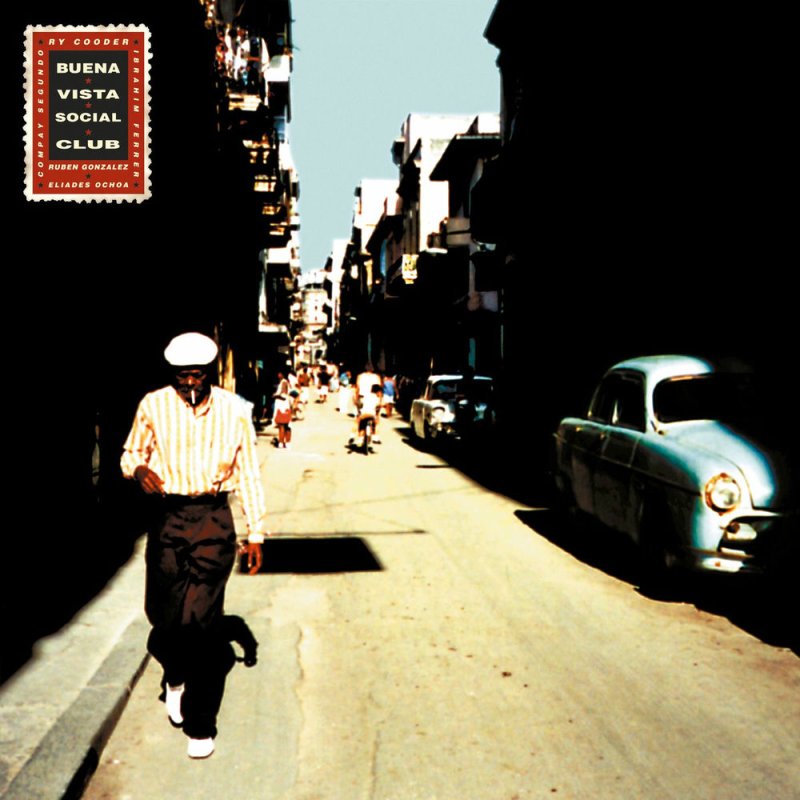
Buena Vista Social Club
Buena Vista Social Club · 1997
1997
Buena Vista Social Club Presents Ibrahim Ferrer
Ibrahim Ferrer
1999
Black Tears
Bebo Valdés & Diego El Cigala
2003
Cuban Style
Orishas
1999
Jalisco Park
Carlos Varela
1989
Chanchullo
Compay Segundo
2000
Buena Vista Social Club Presents Rubén González
Rubén González
1997
Son de Cuba
Afro-Cuban All Stars
1997
**Buena Vista Social Club
Adios** · Various artists
2017
Mundo
Gente de Zona & Descemer Bueno
2014
Closure of the Cuba Series
With this chapter, the Musical Cuba Series by Doresol comes to an end: six articles, six genres, more than four centuries of musical history compressed into a narrative that spans from the colonial grounds of Santiago de Cuba where Pepe Sánchez composed the first bolero in 1883, to the Afro-Cuban clave reggaeton of the 21st century.
Cuba is the most musically influential country in the world in proportion to its size. The son, the bolero, the mambo, the chachachá, the salsa, the Nueva Trova, the Afro-Cuban jazz, and the timba are all genres born on that island that the entire world ended up dancing to, singing, or absorbing in some way. No other territory of one hundred thousand square kilometers has produced, in any period of modern history, a comparable musical influence.
A final note: Cuban music was persecuted by slavery, banned by colonial and republican governments, censored by the Revolution, and silenced by the economic blockade. It survived all of that because it had something that no censorship can eliminate: the human body that needs to move to the rhythm of a drum, and the human voice that needs to sing what the body feels.
Next series: Colombia.
End of Series · Cuba
With this chapter we close the 6-part series on Cuba. Thanks for reading.
The full series
Cuba
Son, mambo, bolero, timba. The island that invented half of the Caribbean.
-
CAP 01
🇨🇺 Ch 01
The Cuban Son: The Soul of an Island (16th Century–1960)
Cuba is, in musical terms, one of the most extraordinary phenomena of the
-
CAP 02
🇨🇺 Ch 02
The Bolero and the Feeling: The Song that Taught a Continent to Love (1883–1960)
In 1883, in Santiago de Cuba, a forty-seven-year-old mulatto tailor named José Viviano Sánchez—known to everyone as Pepe Sánchez—composed a two-verse song for guitar. He called it
-
CAP 03
🇨🇺 Ch 03
The Mambo, the Chachachá, and the Salsa: When Cuba Conquered New York (1938–1980)
The history of mambo, chachachá, and salsa is the story of how Cuban music left the island, traveled to Mexico and New York, and ended up becoming the rhythmic language of an entir
-
CAP 04
🇨🇺 Ch 04
The New Trova: The Song that Could Not Be Silenced (1967–present)
On January 19, 1968, three young Cuban musicians took the stage at La Casa de las Américas in Havana for a concert organized by the newly founded Protest Song Center. Their names w
-
CAP 05
🇨🇺 Ch 05
Cuban Jazz and Timba: The Fusion that Never Stopped (1940–present)
The history of Cuban jazz is not the story of an imported genre that Cuba adopted. It is the story of two musical traditions — Afro-Cuban and American — that recognized each other
-
CAP 06 you are here
🇨🇺 Ch 06
The Buena Vista Social Club and the 21st Century: When the World Rediscovered Cuba (1996–present)
In March 1996, British producer Nick Gold traveled to Havana with an ambitious plan: to record a collaborative album between Cuban musicians and Malian musicians, with American gui
You might also like
3 articles picked by editorial similarity


