


🇨🇺 CU · Cuba · Chapter 3 of 6
The Mambo, the Chachachá, and the Salsa: When Cuba Conquered New York (1938–1980)
The history of mambo, chachachá, and salsa is the story of how Cuban music left the island, traveled to Mexico and New York, and ended up becoming the rhythmic language of an entire Latin American diaspora. It is also the story of how a genre that was born in the solares and cabarets of Havana crossed the Atlantic and reached the Palladium Ballroom on Broadway, Carnegie Hall in New York, and stadiums around the world.

The three rhythms have a common origin: the Cuban son of Arsenio Rodríguez and the danzón of the Havana orchestras. And the three share the same vocation: to make the whole world dance.
The mambo: when Cuba sped up
The word mambo has Bantu origins — in the languages of the Congo and Angola it means something close to "conversation with the gods" or simply "chorus." Arsenio Rodríguez used it to refer to the improvisation sections in his son montuno sessions, the moments when the music sped up and the chorus responded to the soloist with an almost uncontrollable energy. Those moments were the seed of the mambo.
But it was the brothers Israel "Cachao" and Orestes López who formalized the idea. Both belonged to the Orquesta de Arcaño y sus Maravillas in Havana, one of the great charanga orchestras of the thirties. In 1938, they recorded under the Panart label a piece simply called Mambo — an accelerated danzón with a new rhythmic section at the end — which is considered by musicologists as the first recorded mambo in history. Cachao, a bassist of extraordinary technique and musicality that would lead him to be recognized as the father of the mambo, never received in life the full credit he deserved.
The mambo as a mass phenomenon, however, has another father: Dámaso Pérez Prado.
Dámaso Pérez Prado: the King of Mambo
Born in Matanzas in 1917, Pérez Prado arrived in Havana in 1940 and spent the following years working as a pianist and arranger in the city's cabarets. He had a musical vision that exceeded what the Havana scene of the time could offer him: he wanted to combine the energy of the son montuno with the arrangements of the North American big bands of Benny Goodman and Glenn Miller, add the brass in dialogue with Afro-Cuban percussion, and create something that would make anyone dance anywhere in the world.
The Havana industry rejected him. In 1948 he emigrated to Mexico, where he found the environment he needed. There he composed Qué Rico Mambo, Mambo No. 5, Mambo No. 8, and dozens of pieces that in a few months became mass phenomena. His recordings reached the United States and Europe with the same speed as they reached Argentina and Colombia: mambo was international before anyone could register the process.
Pérez Prado's sound was unmistakable: powerful and synchronized brass sections, Afro-Cuban percussion as the base, the piano marking the rhythm with almost mechanical precision, and that characteristic shout —"¡Uhh!"— that Prado launched during recordings and concerts as a starting code that the audience ended up adopting as part of the ritual. He died in Mexico City in 1989 as what he was: the man who had brought Cuban music to the entire world for the first time.
Benny Moré was the performer who put the human voice in that universe. His collaboration with Pérez Prado in Mexico in the early fifties produced recordings that are still today the reference standard for vocal mambo: powerful, improvised, full of a physical joy that no studio recording can fully reproduce.
The Palladium: the cathedral of mambo in New York
While Pérez Prado's mambo was conquering Mexico and Latin America, another equally decisive scene was brewing in New York. At the Palladium Ballroom on Broadway and 53rd Street — one block from Birdland and the Onyx Club, the meccas of New York jazz — three orchestras dominated the nights of the fifties with an intensity that witnesses of the time described as religious.
Machito — Frank Grillo, Cuban — and his orchestra the Afro-Cubans had arrived in New York in the forties and created cu-bop: the first systematic fusion of Afro-Cuban music with modern jazz, with the decisive collaboration of trumpeter Mario Bauzá and bebop figures like Dizzy Gillespie and Charlie Parker. Machito not only made music: he built the bridge between Cuba and New York that everything else would cross later.
Tito Puente — Ernesto Antonio Puente, New Yorker of Puerto Rican parents, born in East Harlem's El Barrio — was the most complete percussionist of his generation: timbales, vibraphone, saxophone, orchestral arrangements. He studied at Juilliard and combined that academic training with the fire of Afro-Cuban rhythms in a synthesis that made him the most recognized Latin musician in the United States for decades. His version of "Oye Cómo Va" — originally for his album El Rey Bravo from 1962 — would become world-famous when Carlos Santana recorded it on Abraxas in 1970.
Tito Rodríguez — Puerto Rican — completed the Palladium trinity with a vocal elegance that contrasted with Puente's percussive intensity and Machito's orchestral breadth.
The Cha-cha-cha: When Mambo Learned to Be Danced
In the early 1950s, in a dance hall in Havana located at Prado and Neptuno, Cuban violinist Enrique Jorrín observed something that no other musician had noted with such attention: dancers were having trouble with the rhythm of the mambo. It was too fast, too complex, too demanding for those who did not have the Afro-Cuban rhythmic instinct in their bodies.
Jorrín's solution was elegant: he took the danzón, slowed it down compared to the mambo, added three steps marked with the feet that created that characteristic sound —cha, cha, chá— and composed La Engañadora, recorded in March 1953 under the Panart label. The record was Panart's best-selling until that moment. The cha-cha-cha was born.
The difference with the mambo was decisive: the cha-cha-cha was accessible. Anyone with some ear could find the step. Dance schools around the world adopted it enthusiastically. By the mid-fifties, the cha-cha-cha was the most popular dance genre on the planet: it was heard in Mexico and Madrid, in Buenos Aires and Tokyo, in the cabarets of Paris and in the dance halls of provinces throughout Latin America.
The Orquesta Aragón was its most elegant vehicle. Formed in Cienfuegos in 1939 and permanently based in Havana, Aragón perfected the sound of the Cuban charanga —flute, violins, piano, bass, percussion— and applied it to the cha-cha-cha with a sophistication and precision that few orchestras in the world have matched. Their repertoire —with figures like flutist Richard Egüés and singer Felo Bacallao— remains a reference for what the genre can be in its purest form.
The Salsa: When the Neighborhood Took the Word
In the sixties, in the neighborhood of Latin Harlem in Upper Manhattan —that territory stretching from Spanish Harlem to the South Bronx, inhabited by Puerto Ricans, Cubans, Dominicans, and Colombians who had migrated in the post-war decades— something new was taking shape. It was the offspring of all that came before: the son montuno of Arsenio, the mambo of the Palladium, the chachachá of Havana's dance halls, the bomba and plena of Puerto Rico, the jazz of New York streets. They called it salsa.
The name came from afar —Ignacio Piñeiro had already titled a song "Échale Salsita" in 1928— but as a genre label, it was consolidated in New York at the end of the sixties. It was, in essence, Cuban music reinterpreted from the Latin marginality of New York: more aggressive, more urban, with more influence from jazz and funk, with lyrics that spoke of the neighborhood, of poverty, of Caribbean identity in a city that did not always welcome them.
Fania Records: the dream factory of the neighborhood
In 1964, Dominican flutist Johnny Pacheco and Italian-American lawyer Jerry Masucci founded Fania Records in New York. The initial distribution was done by Pacheco himself, in his car, delivering records door to door through the Bronx and Spanish Harlem. No one would have bet on it. And yet, Fania became the most influential record label in the history of Latin music, the company that launched, consolidated, and exported salsa to the entire world.
Its catalog was a constellation of talents: Willie Colón —a trombonist from the South Bronx, of Puerto Rican origin, who began recording at fifteen with a musical aggressiveness that both puzzled and fascinated—; Héctor Lavoe —the Puerto Rican from Ponce who arrived in New York without knowing English and became the most beloved voice of salsa, with an improvisational ability and a tragic sense of life that his fans recognized as their own—; Rubén Blades —the Panamanian who took salsa into the realm of political song and social chronicle with unprecedented lyrical sophistication in the genre—; Ray Barretto, Larry Harlow, Roberto Roena; and above all, Celia Cruz.
Celia Cruz joined Fania in 1973, twenty years after her debut with the Sonora Matancera in Havana. She was already an established figure, but Fania gave her a new stage and a new audience: the Latin American diaspora of New York, who adopted her as their own queen. Her collaboration with Tito Puente, with Johnny Pacheco, and with the Fania All Stars —the label's super orchestra— produced some of the most celebrated recordings in the entire history of salsa.
In 1973, the Fania All Stars played at Yankee Stadium before tens of thousands of people. The concert was documented and turned into a film. That moment is the equivalent, for salsa, of what the Woodstock Festival was for rock: a moment of collective affirmation where a genre and a community recognized each other on a historical scale.
The Legacy: From Havana to the World
The line that goes from Arsenio Rodríguez composing in Havana in the 1940s to the Fania All Stars filling Yankee Stadium in 1973 is one of the most extraordinary trajectories of 20th-century popular music. A genre born in the poverty of Cuban solares, exported by exiled and migrant musicians, transformed in New York's Latin neighborhood by communities that adopted it as their own, and returned to the entire world as the sound of a Caribbean identity proud of itself.
Mambo, chachachá, and salsa are not separate genres: they are stations of the same journey. The journey of Cuban music to the world.
10 · 1 en DoReSol
Top 10 Essential Albums of Mambo, Chachachá, and Salsa
Qué Rico Mambo
Dámaso Pérez Prado
1949
Celia y Johnny
Celia Cruz & Johnny Pacheco
1974
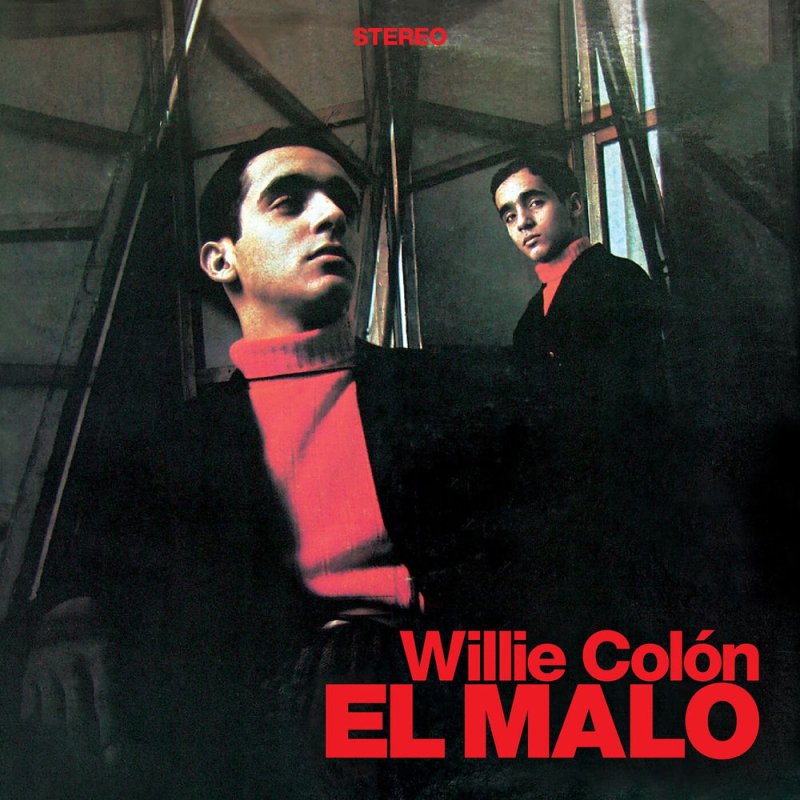
El malo
Willie Colón · 1968
1967
Siembra
Willie Colón & Rubén Blades
1978
La Engañadora
Orquesta América / Enrique Jorrín
1953
The Brave King
Tito Puente
1962
Fania All Stars Live at the Cheetah
Fania All Stars
1972
Happy Encounter
Orquesta Aragón
1956
With the Devil
Héctor Lavoe
1975
Cachao and His Hot Rhythm
Israel "Cachao" López
1957
The full series
Cuba
Son, mambo, bolero, timba. The island that invented half of the Caribbean.
-
CAP 01
🇨🇺 Ch 01
The Cuban Son: The Soul of an Island (16th Century–1960)
Cuba is, in musical terms, one of the most extraordinary phenomena of the
-
CAP 02
🇨🇺 Ch 02
The Bolero and the Feeling: The Song that Taught a Continent to Love (1883–1960)
In 1883, in Santiago de Cuba, a forty-seven-year-old mulatto tailor named José Viviano Sánchez—known to everyone as Pepe Sánchez—composed a two-verse song for guitar. He called it
-
CAP 03 you are here
🇨🇺 Ch 03
The Mambo, the Chachachá, and the Salsa: When Cuba Conquered New York (1938–1980)
The history of mambo, chachachá, and salsa is the story of how Cuban music left the island, traveled to Mexico and New York, and ended up becoming the rhythmic language of an entir
-
CAP 04
🇨🇺 Ch 04
The New Trova: The Song that Could Not Be Silenced (1967–present)
On January 19, 1968, three young Cuban musicians took the stage at La Casa de las Américas in Havana for a concert organized by the newly founded Protest Song Center. Their names w
-
CAP 05
🇨🇺 Ch 05
Cuban Jazz and Timba: The Fusion that Never Stopped (1940–present)
The history of Cuban jazz is not the story of an imported genre that Cuba adopted. It is the story of two musical traditions — Afro-Cuban and American — that recognized each other
-
CAP 06
🇨🇺 Ch 06
The Buena Vista Social Club and the 21st Century: When the World Rediscovered Cuba (1996–present)
In March 1996, British producer Nick Gold traveled to Havana with an ambitious plan: to record a collaborative album between Cuban musicians and Malian musicians, with American gui
You might also like
3 articles picked by editorial similarity


