The story behind
Let's Go Away For A While, according to DoReSol
The instrumental piece *Let's Go Away For Awhile* by The Beach Boys stands out for its evocative atmosphere, built with an orchestration that goes beyond the conventional for its time. Brian Wilson applied a detailed vision in its arrangement and mixing, seeking a complete musical extension of his initial ideas. The complexity of the chord changes and the variety of instruments used, including twelve violins, piano, four saxofones, oboe, vibraphone, a guitar with an improvised "steel guitar" effect using a glass bottle on the strings, two basses, and percussion, create a distinctive sonic tapestry. This approach sought to expand Phil Spector's "Wall of Sound" technique and, according to Brian Wilson, the piece was a "Burt Bacharach-type thing".
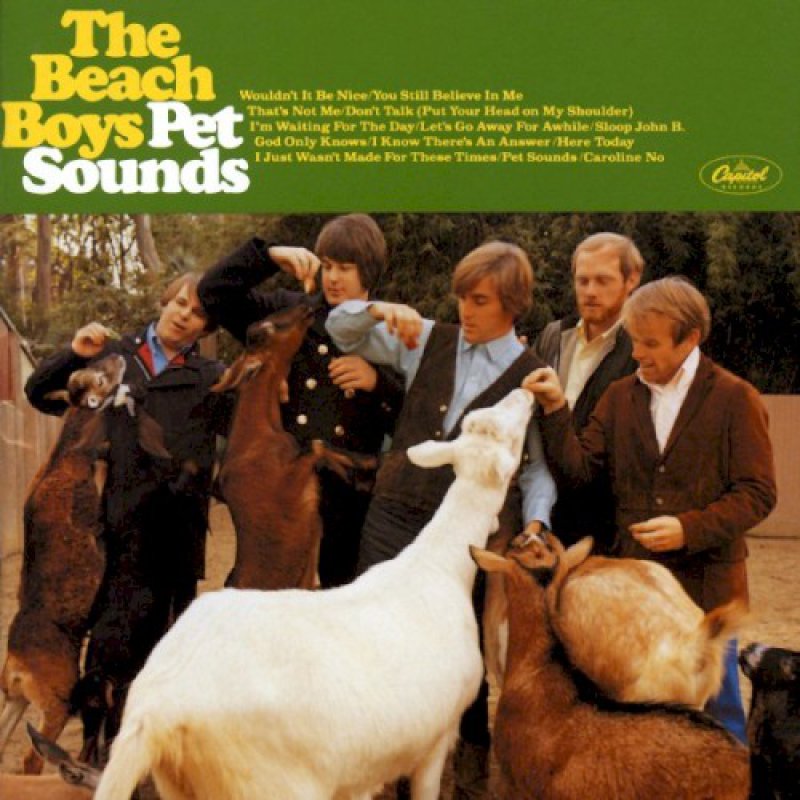
Recorded primarily between January and April 1966, *Let's Go Away For Awhile* is part of the album *Pet Sounds*, released in May of the same year by Capitol Records. This work represented an evolution in The Beach Boys' sound, incorporating elements of jazz, exotica, classical music, and avant-garde, fused with rock instrumentation and the group's characteristic vocal harmonies. It was on this album that studio musicians, such as those from the "Wrecking Crew", began to replace band members in the recording of their instruments. Originally, the piece had working titles such as *The Old Man And The Baby* and a more extended version, *Let's Go Away For Awhile (And Then We'll Have World Peace)*, the latter referencing a comedy album by Del Close and John Brent. Brian Wilson described the piece in 1967 as "the most satisfying piece of music I've ever made", suggesting that the idea of "going away for a while" is a universal thought.
From album

Pet Sounds
The Beach Boys · 1966 · Track 6
Details
Credits
Music Brian Wilson