The story behind
A Certain Romance, according to DoReSol
What captivates most about A Certain Romance is not just its length — five and a half minutes that feel like a journey — but that two-minute guitar solo that weaves in and out without a single word. There is no chorus to anchor it, only a spiral of notes rising and falling as if the lead guitarist, Alex Turner, had decided to let the strings speak for him. The song closes Whatever People Say I Am, That's What I'm Not (2006), and instead of a conventional ending, it delivers a moment of pure controlled chaos: two guitars challenging each other, intertwining, and suddenly merging into something that sounds like relief or surrender. It is not music that can be explained; it is music that must be felt, which is why critics at the time highlighted it as one of the most original tracks on the album.
Turner wrote A Certain Romance as a teenager, inspired by what he saw around him: the way young people in his city moved between arrogance and vulnerability, between the desire to belong and the impossibility of doing so. He first recorded it as a demo in 2004, among a handful of tracks the band distributed on bootleg CDs that ended up circulating online. For the album, they reworked it at The Chapel (South Thoresby) in 2005, with Jim Abbiss producing and mixing handled by Simon “Barny” Barnicott and Owen Skinner. The final version retains that initial rawness but adds layers: the lyrics, which begin as judgment and end in empathy, and that solo, which, according to Matt Mitchell of Paste, "takes an oath before the gods." The song was never released as a single, yet the media praised it equally: NME called it "strangely even-tempered," Rolling Stone described it as a hyperrealistic portrait of youth, and Pitchfork saw it as a perfect summary of the band’s style: existential, claustrophobic, and, against all odds, full of humanity.
From album

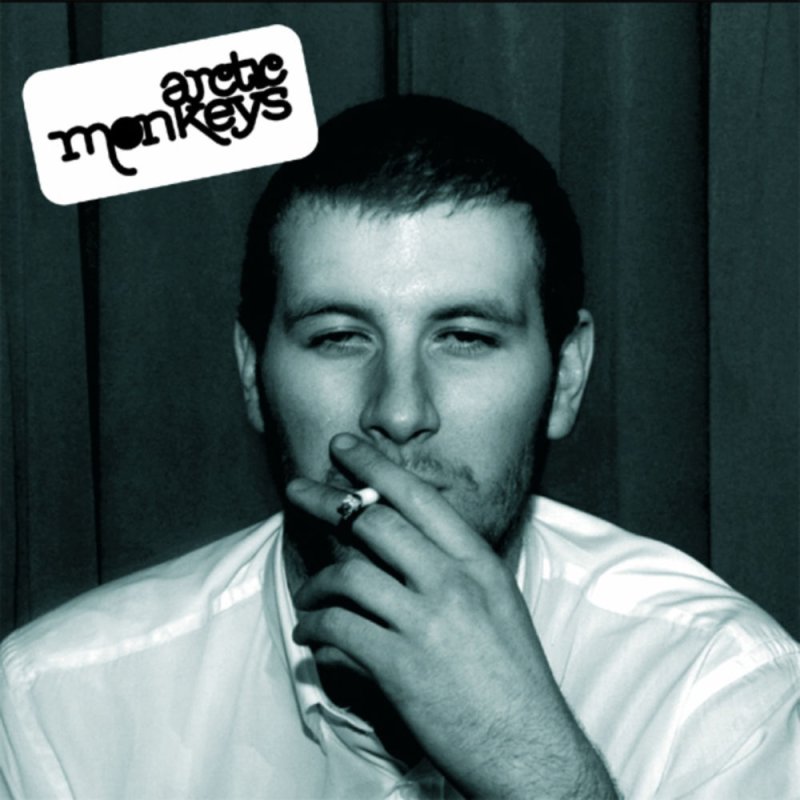
Whatever People Say I Am, That’s What I’m Not
Arctic Monkeys · 2005 · Track 13
Details
Credits
Lyrics Alex Turner
Music Alex Turner, Jamie Cook, Matt Helders, Andy Nicholson