


🇨🇴 CO · Colombia · Chapter 1 of 6
Cumbia: The Queen of Caribbean Rhythms (18th century–present)
Colombia is, in musical terms, one of the most diverse countries in the world. Its

And at the center of it all, like the mother from which dozens of other genres are derived, is cumbia.
Three continents in a single rhythm
The word cumbia comes from the African term cumbé, which in Bantu languages designates a form of collective festivity or merrymaking. That linguistic origin says everything there is to know about the essence of the genre: it is a music born from celebration, from the body in motion, from a community that recognizes itself through dance.
Its roots are three and they are inseparable. From Africa came the drums — the llamador and the alegre, taut-skinned percussion instruments that mark the irresistible pulse of cumbia — and the syncopated rhythmic structure that is the sonic signature of the genre. From the indigenous peoples of the Caribbean coast — mainly the Kogui, the Zenú, and the Cuna — came the gaitas, long flutes carved from the heart of a cactus with a duck feather as a mouthpiece, which produce a penetrating and melancholic melody that contrasts with the percussive joy. And from the Spanish colonization came the coplas, the poetic structure of verse and refrain, and certain harmonic elements that the fusion absorbed without erasing what had come before.
Colombian folklore researcher Guillermo Abadía Morales described cumbia as "a zambo conjunction of the musical air through the fusion of the melancholic indigenous flute gaita with the joyful and impetuous sonority of the African drum". It is the most precise definition ever given of the genre: melancholy and joy at the same time, the ancestral and the festive in a single form.
The first documentary evidence of cumbia dates to 1840, when a text describes a nocturnal dance on the Caribbean coast where participants carry lit candles. The women held a candle in their right hand to illuminate the steps and keep their partner at a respectable distance — a codified gesture of flirtation that is still reproduced in formal folk dances. But the roots of the genre are much older: the tri-ethnic fusion process that generated it began with the arrival of the first African enslaved people on the Colombian Caribbean coast in the seventeenth century.
The region: the Colombian Caribbean as cradle
Cumbia was born in the so-called Momposina region — the swampy area of the Magdalena River delta, between the current departments of Bolívar, Sucre and Córdoba — and from there it expanded along the course of the river northward, reaching Barranquilla, Cartagena and Santa Marta. The municipality of El Banco, in the department of Magdalena, is considered one of its most important historical centers, and every year the Festival Nacional de la Cumbia José Barros Palomino — declared Cultural Heritage of the Nation — celebrates that legacy with musicians coming from all over Colombia.
San Jacinto, in the Montes de María of the department of Bolívar, is the epicenter of gaita music: there the legendary Gaiteros de San Jacinto operate, the oldest and most influential group of traditional cumbia in its original format. The gaita they play is literally pre-Hispanic: that flute made from the heart of a cactus and the feather of a duck that the indigenous peoples of the region have been using since before the arrival of Europeans, and which cumbia adopted as its fundamental melodic voice. During the armed conflict that devastated that region for decades, it is said that the FARC guerrillas would let musicians through as long as they showed their instruments. The gaita was a safe-conduct pass. There is no clearer image of the place music holds in Colombian identity.
Barranquilla, without being the birthplace of cumbia, was its great launching platform. The port city at the mouth of the Magdalena had the commercial density, cultural diversity and festive energy needed to transform a regional music into a national phenomenon. And it had the Carnival.
The Barranquilla Carnival: the world's showcase
The Barranquilla Carnival is the second largest carnival in the world after Rio de Janeiro, and has been declared a Masterpiece of the Oral and Intangible Heritage of Humanity by UNESCO since 2003. For four days — from the Saturday before Ash Wednesday until Tuesday — the entire city becomes a stage where cumbia, mapalé, porro, vallenato, and dozens of other rhythms coexist in a celebration that draws more than a million people to the streets.
For cumbia, the Barranquilla Carnival was what the Rio Carnival was for samba: the space where music of popular and peripheral origin became a symbol of national identity, where the middle and upper classes learned to dance to what they previously considered music of Black and poor people, and where the genre found the necessary visibility to cross the country's borders.
Lucho Bermúdez: the maestro who urbanized cumbia
Luis Eduardo Bermúdez Acosta — Lucho Bermúdez — was born in Carmen de Bolívar on January 25, 1912, and died in Bogotá in 1994. He was the musician who did the most to bring cumbia from the patios and coastal carnivals to the ballrooms of the country's interior and to the international market.
Bermúdez had formal musical training — clarinet, orchestral conducting — and used that training to adapt the traditional rhythms of the Caribbean coast to the big band arrangements characteristic of Latin jazz in the forties and fifties. The result was a ballroom cumbia: more refined instrumentally, with elaborate wind sections, with the basic rhythm preserved but wrapped in a production that made it possible to bring it to grand theaters and national radio.
His most famous composition — "Colombia Tierra Querida" — became the country's unofficial anthem. A song that blends the rhythm of cumbia with a patriotic lyric that no Colombian can hear without feeling something. Decades after it was written, Disney included it in the soundtrack of Encanto (2021), the animated film set in Colombia, bringing Bermúdez's cumbia to screens around the world.
Bermúdez also had by his side Matilde Díaz — his life partner and the lead voice of his orchestra for decades. Díaz was the most important female performer of ballroom cumbia, with an elegance and stage presence that turned songs like "Danza Negra" and "Prende la Vela" into standards of the Colombian repertoire.
José Barros: the poet of the river
José Benito Barros Palomino was born in El Banco, Magdalena, on March 21, 1915, and died in Santa Marta on May 12, 2007, at the age of ninety-two. In that time he composed more than eight hundred songs in genres ranging from cumbia to porro, from bolero to tango. He is the most prolific and most recorded Colombian composer in history.
He is known as "the composer of the river" because the Magdalena River — that body of water that crosses Colombia from south to north and for centuries was its main artery of communication — appears in his work as a constant protagonist. "La Piragua" — the story of a vessel that crossed the Cesar River — is one of the most beloved songs in Colombia, sung in schools, at parties, at family gatherings with the naturalness of someone who has known something by heart since childhood. "El Pescador" completes the pair of his most iconic fluvial cumbias.
Barros composed for seventy years without stopping, with a consistency and creative generosity that musicians of later generations described with reverence. His work is the poetic inventory of everyday life on the Colombian Caribbean coast of the twentieth century: the rivers, the towns, the loves, the festivities, the journeys.
Totó la Momposina: the voice that brought cumbia to the world
Sonia Bazanta Vides — Totó la Momposina — was born in Talaigua Nuevo, Bolívar, on August 1, 1940, into a family with five generations of musical tradition. Her father was a percussionist, her mother a dancer and singer, her grandfather played the clarinet and led a band in Magangué. Music was not a choice for her: it was her inheritance, the family language, the only way of being in the world she had known since childhood.
She began her professional career in the 1960s, formed her first family ensemble, studied at the Conservatory of the Universidad Nacional de Colombia — combining academic training with the oral tradition of the Caribbean coast — and over decades built a repertoire that was at once archive and performance: each song was a piece of Colombian folklore that she rescued, interpreted, and projected with the urgency of someone who knows that traditions die if no one keeps them alive.
Her moment of international recognition came in various ways. In 1982, when Gabriel García Márquez won the Nobel Prize in Literature, Totó la Momposina traveled to Stockholm as a cultural representative of Colombia during the award ceremony: the same night Gabo collected the Nobel wearing a guayabera, Totó played the drums of the Caribbean coast for the Swedish academics. There is no more fitting symbol of what Colombia is culturally: literature and music, Caribbean and world, poetry and percussion.
In 1993, with the support of musician Peter Gabriel's Real World label, she released La Candela Viva — produced by Phil Ramone — which brought cumbia, bullerengue, and Colombian porro to international audiences who had never before heard those rhythms. The album established her global standing. In 2006 she received the Career Award at the WOMEX Festival — the most important international world music fair in the world. In 2013 she received the Latin Grammy Lifetime Achievement Award. She died in 2024, at the age of eighty-four, recognized as the greatest interpreter and ambassador of Colombian folk music of all time.
"My name is cumbia, I am the queen wherever I go. There is no hip that stays still wherever I am." Those lines from "Yo Me Llamo Cumbia" — written by Mario Gareña — are the most precise description of what cumbia is: a music that commands the body, that asks no permission, that accepts no stillness.
The continental expansion: when cumbia left Colombia
From the nineteen forties onward, with the spread of radio and vinyl records, cumbia began travelling across Latin America at a speed that sets it apart from almost any other continental folk genre. In Mexico it was adopted with such enthusiasm that today there exists a Mexican cumbia tradition — norteña cumbia, with accordion and bajo sexto — so deeply rooted that many Mexicans believe cumbia is theirs. In Argentina it found in the working-class sectors of major cities an audience that transformed it into cumbia villera, then into cumbia santafesina, then into cumbia pop. In Peru it gave rise to chicha. In Chile, to cuarteto. In every country, cumbia was not copied but reinvented: that is the hallmark of genres that truly belong to all of humanity.
Colombian folklorist Guillermo Abadía Morales wrote that "cumbia is the highest expression of Colombian mestizaje." He was right, but he sold it short: cumbia is also the highest expression of Latin American mestizaje, the music that best demonstrates that identity is not purity but mixture, that cultural wealth does not come from a single origin but from the convergence of differences.
In 2022, Colombia's Ministry of Culture declared cumbia a National Cultural Heritage — a recognition that arrived late but was unanimously celebrated. It had been one for several centuries without anyone needing the decree.
10 · 1 en DoReSol
Top 10 Essential Albums and Recordings of Colombian Cumbia
La Candela Viva
Totó la Momposina
1993
Colombia Tierra Querida
Lucho Bermúdez y su Orquesta
1956
Pacantó
Totó la Momposina
1999
La Piragua
José Barros
1960
Gaiteros de San Jacinto
Gaiteros de San Jacinto
1970s
Danza Negra
Matilde Díaz con Lucho Bermúdez
1950s
Soy Colombiana
Totó la Momposina
1989
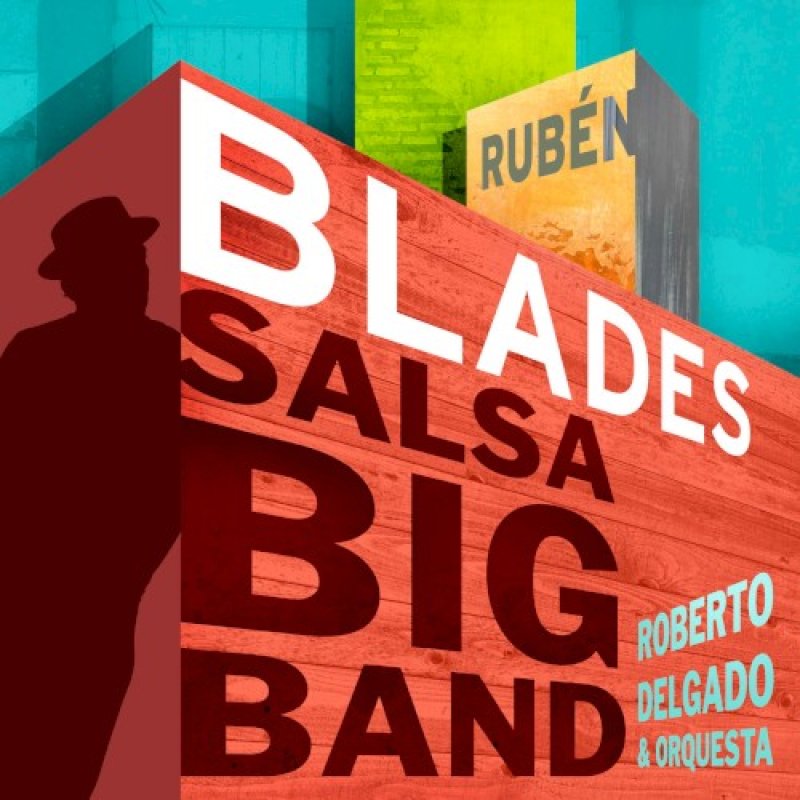
El pescador
Rubén Blades · 2017
1954/1993
Cumbia Cumbia
Various Artists
1987
Antología de la Música Colombiana
Lucho Bermúdez
1994
Editorial note: Totó la Momposina passed away in 2024. Her death represents the end of an era in Colombian folk music. No artist of the 20th century did more to preserve, interpret, and project Colombian cumbia to the world. Her legacy is irreplaceable.
The full series
Colombia
Cumbia, vallenato, Colombian salsa, champeta. Music to dance to and cry to.
-
CAP 01 you are here
🇨🇴 Ch 01
Cumbia: The Queen of Caribbean Rhythms (18th century–present)
Colombia is, in musical terms, one of the most diverse countries in the world. Its
-
CAP 02
🇨🇴 Ch 02
The Vallenato: The Accordion that Told the Story of a Country (1870–present)
Vallenato has a paradox at its heart: its main instrument — the diatonic accordion — is European. It was invented in Vienna in 1829 by the Austrian Cyrill Demian. It arrived on the
-
CAP 03
🇨🇴 Ch 03
Andean Music and Bambuco: The Soul of the Interior (19th Century–present)
When the world thinks of Colombian music, it thinks of the Caribbean coast: cumbia, vallenato, drums, the heat of the Atlantic. But Colombia has another musical half that lives inl
-
CAP 04
🇨🇴 Ch 04
The Caleña Salsa: The City that Dances Faster than Anyone (1960–present)
The salsa was not born in Colombia. It was born in New York in the sixties, at the crossroads between Afro-Caribbean music — Cuban son, mambo, guaracha, guaguancó — and American ja
-
CAP 05
🇨🇴 Ch 05
Rock, Pop, and Hip-Hop: The Generation that Connected Colombia with the World (1985–present)
The nineties in Colombia were both the worst and the most creative at the same time. The country was experiencing a war on multiple fronts: the drug trafficking of the Medellín and
-
CAP 06
🇨🇴 Ch 06
The 21st Century: Medellín, World Capital of Reggaeton (2000–present)
Medellín did with reggaeton what Cali did with salsa fifty years earlier: it took a genre that wasn't born there, dismantled it to find out what was inside, and reassembled it with
You might also like
3 articles picked by editorial similarity


