


🇨🇴 CO · Colombia · Chapter 5 of 6
Rock, Pop, and Hip-Hop: The Generation that Connected Colombia with the World (1985–present)
The nineties in Colombia were both the worst and the most creative at the same time. The country was experiencing a war on multiple fronts: the drug trafficking of the Medellín and Cali cartels at its most violent stage, the FARC and ELN guerrillas operating in the countryside, the paramilitaries responding with their own methods, and a State that seemed overwhelmed everywhere. Medellín was the most dangerous city in the world during those years. Colombians who grew up in that decade lived with violence as a constant backdrop to their daily lives.

In that context, a generation of young musicians from Bogotá, Cali, and Barranquilla did exactly what previous generations had done in the most challenging moments of Latin American musical history: they created. Not to escape reality but to name it, to process what could not be processed in any other way, to prove to themselves and others that Colombia was also that — not just the violence but also the people who lived within it and found ways to be.
Colombian Rock Before the Boom: The Pioneers
Rock arrived in Colombia in the 1960s as it did throughout Latin America: through the radio, imported vinyl records, and the fascination of urban youth with the Beatles, the Rolling Stones, and Motown. Bogotá, Medellín, and Cali had their own beat and psychedelic bands in the sixties and seventies, but without a local record industry to support them and with the weight of a musical culture that favored cumbia, vallenato, and salsa, these bands existed on the margins.
The eighties brought heavy metal — Kraken, in Medellín, was the first Colombian metal band to reach a mass audience — and with the nineties came alternative rock and punk, which in Mexico and Argentina had already been building their own recognizable scenes for years. The difference is that in Colombia, the process arrived later and in a more extreme social context: making rock in Bogotá in 1992 was also a political statement, a way of saying that there was a Colombia that was neither the cartel nor the guerrilla nor the international news.
Aterciopelados: the band that put Colombia on the rock map
Andrea Echeverri and Héctor Buitrago met in Bogotá in the late eighties. She was studying Fine Arts at the University of the Andes. He played the bass. Together they first formed Delia y los Aminoácidos — which played at Bar Barie, the small bar they managed themselves in the capital — and in 1993 they reformed the project under the definitive name: Aterciopelados.
The sound of Aterciopelados was unmistakable and was Colombian in a way that no other Spanish rock band had been before: they took the base of Anglo-Saxon punk and alternative rock — the direct energy, the unadorned voice, the guitar as a weapon of expression — and fused it with elements of Colombian folklore, Caribbean coast rhythms, Andean cadences, texts that spoke of ecology, feminism, and memory from a perspective that did not come from any imported manual but from the specific experience of being Colombian and a woman in the nineties.
El Dorado (1995) — their second album — was the record that established them. "Bolero Falaz", "Florecita Rockera", "Candela", "Colombia Conexión": songs that mixed alternative rock with Latin American rhythms in such a natural way that Rolling Stone Colombia placed them at number one on its list of the fifty best Colombian songs of all time. Billboard ranked them in 2026 as the tenth best Spanish rock band in history — the only Colombian in the top 10, above Mexican and Argentine bands that had been building their scenes for decades.
Andrea Echeverri sang alongside Soda Stereo in the Argentine band's MTV Unplugged in 1996 — the appearance that definitively put them on the international radar. She was the only guest artist on that historic night.
Aterciopelados won four Latin Grammys and were named Guardians of Peace by Amnesty International. They remain active and continue to be, more than thirty years after their founding, the most important rock band Colombia has produced.
The context: Colombian rock under violence
The Bogotá rock scene of the nineties was not just musical. It was also social in a very concrete sense: concerts were spaces where young people from the urban middle class found a community that was neither family, church, nor the State — the three institutions that the armed conflict had put in crisis or under suspicion. The festival Rock al Parque — created in Bogotá in 1995 and over the years becoming the largest rock festival in Latin America in terms of free attendance — was the institutional expression of that drive: the city of Bogotá betting on music as an alternative to violence, as a way to reclaim public space for young people who otherwise had nowhere to be.
Rock al Parque was born during the mayoralty of Antanas Mockus — the philosopher and mathematician who transformed Bogotá in the nineties with an unprecedented vision of civic culture — and became the largest free music event in Colombia, attracting up to one hundred thousand people per edition. It is also, along with the Barranquilla Carnival and the Vallenato Festival, one of the most important musical events in the country.
Shakira: from Barranquilla to the world
Shakira Isabel Mebarak Ripoll was born in Barranquilla on February 2, 1977, daughter of a Lebanese father and Colombian mother. At eight years old, she was already writing songs. At thirteen, she signed her first recording contract with Sony Music Colombia. Her first two albums Magia (1991) and Peligro (1993), recorded when she was fourteen and sixteen respectively — were commercial failures that Shakira herself acknowledges as part of a learning process.
The change came in 1995 with Pies Descalzos — the album that established her in the Latin American market with songs like "Estoy Aquí" and "Antología", completely written by her. Shakira was — and still is — an anomaly in the Latin pop industry: an artist who writes all her songs, plays the guitar, has strong opinions about her sound, and has never accepted the prefabricated formula that record labels offer to young artists.
¿Dónde Están los Ladrones? (1998) — produced by Emilio Estefan — was the album that made her a continental star and prepared her for the conquest of the Anglo-Saxon market. With "Ciega, Sordomuda", "Ojos Así" — where she incorporated the Arabic singing she had learned since she was five years old due to her Lebanese family influence — and "Inevitable", Shakira demonstrated that she could be both deeply Colombian and completely universal.
Laundry Service (2001) — her first bilingual album — took her to the North American market with a speed that no Latin artist had achieved before. Fijación Oral Vol. 1 (2005) with "La Tortura" alongside Alejandro Sanz and "Hips Don't Lie" consolidated her as the most streamed female Latin artist of all time on Spotify — a record she maintains to this day.
Shakira is not only the most successful Colombian artist in history: she is the Latin American artist who has sold the most records in the history of the genre, with over seventy million albums. Her Pies Descalzos Foundation — created in 1997 to fund schools in vulnerable areas of Colombia — is one of the most active philanthropic projects that a Colombian artist has maintained for decades. The UN appointed her as a UNICEF Goodwill Ambassador in 2003.
Carlos Vives: the bridge between genres
Although Carlos Vives holds the most prominent place in the history of vallenato — as we documented in Chapter 2 of this series — his role in Colombian rock and pop deserves a separate mention. Vives was the first Colombian artist to build a proposal that mixed the Caribbean folk genres with the production of international rock and pop in a way that the world could absorb without needing to know the prior Colombian context.
That openness — that gesture of saying that cumbia, vallenato, and porro could play on the same radios as Sting, as U2, as the greats of Anglo-Saxon pop — was the key that opened the door for all the Colombian artists who came after: Shakira, ChocQuibTown, J Balvin, Maluma. They all owe Carlos Vives for having demonstrated that it was possible.
Juanes: rock with a conscience
Juan Esteban Aristizábal VásquezJuanes — was born in Medellín in 1972. He grew up in the Coffee Axis, studied classical guitar, and in the nineties formed the rock band Ekhymosis, which was the first Colombian band to record on an international label. When it dissolved in 1998, he began a solo career that in 2000 took him to Los Angeles, where he recorded his first solo album Fíjate Bien with producer Gustavo Santaolalla.
Fíjate Bien (2000) won three Latin Grammys — including Best New Artist — and launched a career that over the next twenty years accumulated twenty-three Latin Grammys, making him the artist with the most awards at that ceremony after Carlos Santana. His songs — "A Dios le Pido", "La Camisa Negra", "Me Enamora", "Fotografía" with Nelly Furtado — mixed Spanish rock with elements of vallenato and Colombian Andean music with a production that sounded at any time on any radio station on the continent.
Juanes also used his platform with a consistency that few artists of his level have maintained: his concerts for peace in Colombian armed conflict zones, his activism against landmines, his Mi Sangre Foundation — dedicated to caring for conflict victims — made him the Colombian artist with the highest political and social profile of his generation.
ChocQuibTown: the Colombian Pacific in the world
Carlos "Tostao" Valencia, Gloria "Goyo" Martínez, and Miguel "Slow" Martínez were born and raised in the department of Chocó — the Colombian Pacific region, bordering Panama, mostly inhabited by Afro-Colombian communities, one of the most biodiverse on the planet and at the same time one of the most neglected by the Colombian state. They formed ChocQuibTown in Cali in 2000, then moved to Bogotá, and began to build a sound that no one had made before: hip-hop and funk mixed with the traditional rhythms of the Colombian Pacific — currulao, chigualo, bunde, abozao — with lyrics that spoke of Chocó from within, with love and anger at the same time.
Their second album Oro (2010) launched them to international recognition with the single "De Donde Vengo Yo" — a song that is at the same time a celebration of Chocoan identity and a denunciation of the multinationals and corrupt politicians who exploit the gold and platinum of the Pacific while its communities live in poverty. They won the Latin Grammy for Best Alternative Song of the Year in 2010 — the first Latin Grammy won by artists originating from Chocó in the entire history of the award.
"De Donde Vengo Yo" is a political song disguised as a festive anthem, in the same line as Joe Arroyo's "Rebelión": pain processed as rhythm, denunciation turned into something that people dance to without ceasing to understand what it says. ChocQuibTown did for the Colombian Pacific what Aterciopelados did for Bogotá and what Joe Arroyo did for Cartagena: returning to a region its own dignity in the form of a song.
The Legacy: Colombia as a Musical Powerhouse
The generation we describe in this chapter — Aterciopelados, Shakira, Juanes, ChocQuibTown, Carlos Vives — built in two decades something that Colombia had never had before: an international musical identity that went beyond a single genre. They were not just the musicians of cumbia or vallenato: they were Colombian artists who could compete in any category, in any language, in any market, without losing the mark of origin that made them recognizable as Colombians.
That conquest was also a conquest of dignity at a time when Colombia was known in the world mainly for violence and drug trafficking. Shakira winning Grammys, Juanes filling stadiums in Spain, Aterciopelados being ranked among the best Spanish rock bands in history: those victories were not just musical. They were political in the deepest sense of the term.
Editorial Note: In 2026, Billboard published its list of the fifty best Spanish rock bands in history. Aterciopelados appear in 10th place — the only Colombian band in the top 10 — with this description: "Without imagining it, they became the most influential rock band in their country, and Echeverri the woman who changed the face and sound of Colombian rock forever." Soda Stereo occupies the first place. That a Colombian band is among the top ten of a genre that Colombia adopted decades after Argentina and Mexico says everything about what that generation of musicians achieved.
10 · 2 en DoReSol
Top 10 Essential Albums of Colombian Rock, Pop, and Hip-Hop
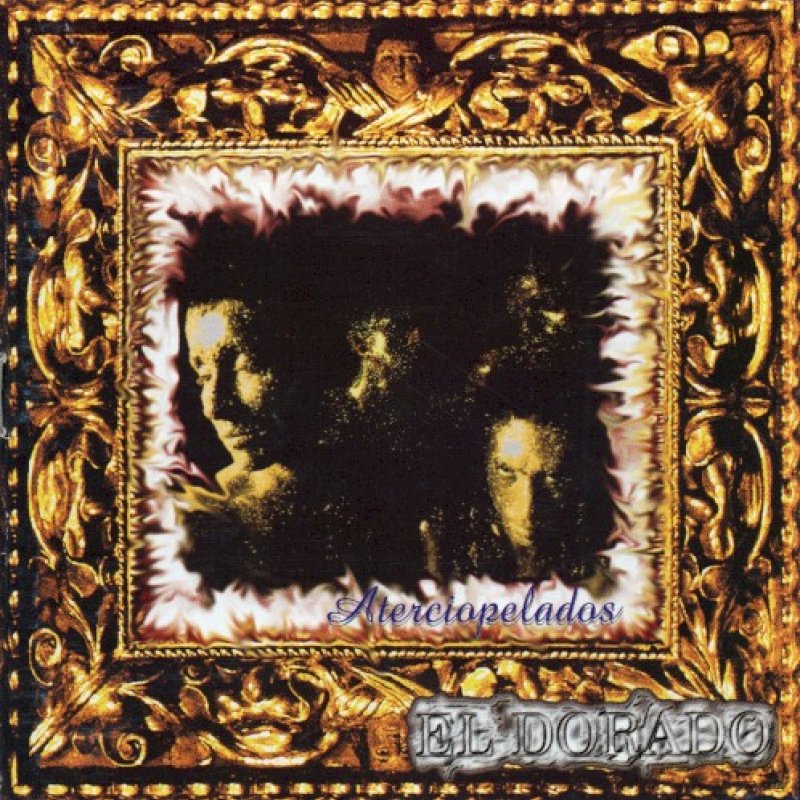
El Dorado
Aterciopelados · 1995
1995
Where Are the Thieves?
Shakira
1998
Bare Feet
Shakira
1995
Look Carefully
Juanes
2000
Gold
Spandau Ballet · 1983
2010
My Blood
Juanes
2004
Powerful Joy
Aterciopelados
1999
Laundry Service
Shakira
2001
That's What There Is
ChocQuibTown
2011
Ekhymosis
Ekhymosis
1995
Next and final chapter — Colombia Series: Colombia in the 21st Century: J Balvin, Maluma, and the global conquest of Colombian reggaeton (2005–present).
The full series
Colombia
Cumbia, vallenato, Colombian salsa, champeta. Music to dance to and cry to.
-
CAP 01
🇨🇴 Ch 01
Cumbia: The Queen of Caribbean Rhythms (18th century–present)
Colombia is, in musical terms, one of the most diverse countries in the world. Its
-
CAP 02
🇨🇴 Ch 02
The Vallenato: The Accordion that Told the Story of a Country (1870–present)
Vallenato has a paradox at its heart: its main instrument — the diatonic accordion — is European. It was invented in Vienna in 1829 by the Austrian Cyrill Demian. It arrived on the
-
CAP 03
🇨🇴 Ch 03
Andean Music and Bambuco: The Soul of the Interior (19th Century–present)
When the world thinks of Colombian music, it thinks of the Caribbean coast: cumbia, vallenato, drums, the heat of the Atlantic. But Colombia has another musical half that lives inl
-
CAP 04
🇨🇴 Ch 04
The Caleña Salsa: The City that Dances Faster than Anyone (1960–present)
The salsa was not born in Colombia. It was born in New York in the sixties, at the crossroads between Afro-Caribbean music — Cuban son, mambo, guaracha, guaguancó — and American ja
-
CAP 05 you are here
🇨🇴 Ch 05
Rock, Pop, and Hip-Hop: The Generation that Connected Colombia with the World (1985–present)
The nineties in Colombia were both the worst and the most creative at the same time. The country was experiencing a war on multiple fronts: the drug trafficking of the Medellín and
-
CAP 06
🇨🇴 Ch 06
The 21st Century: Medellín, World Capital of Reggaeton (2000–present)
Medellín did with reggaeton what Cali did with salsa fifty years earlier: it took a genre that wasn't born there, dismantled it to find out what was inside, and reassembled it with
You might also like
3 articles picked by editorial similarity


