The story behind
There Is No Greater Love, according to DoReSol
When we dive into There Is No Greater Love, we encounter a performance that, although brief —barely 2:59—, condenses deep emotion. The voice of Billie Holiday, also known as Lady Day, unfolds with a warmth that seems to invite the listener to feel every word. What's interesting about this piece is how her style, marked by a unique expressiveness and a way of phrasing that deviates from the conventional, manages to convey a touching intimacy, almost as if she were sharing a secret.
Billie Holiday, born Eleanora Fagan Gough in 1915 in Philadelphia, developed her art in a context where music was her refuge and her voice, her main tool. Her musical training did not come from classrooms, but from the attentive listening of figures like Bessie Smith and Louis Armstrong. It was in the vibrant atmosphere of 1930s Harlem where, seeking a way to make a living, she found her path in singing. After a failed attempt as a dancer in a club, a pianist gave her the opportunity to sing, thus revealing the talent that would lead her to become a prominent figure. Her life, marked by difficulties from an early age, seems to have been channeled into the intensity and authenticity of her performances.
From album

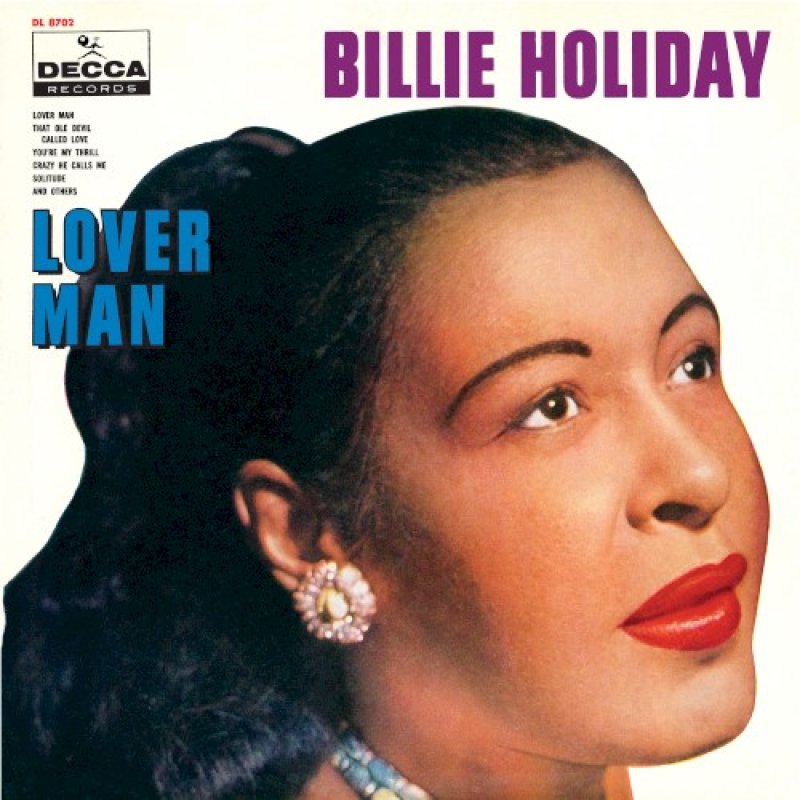
Lover Man
Billie Holiday · 2005 · Track 7
Details
Credits
Lyrics Marty Symes
Music Isham Jones