The story behind
The Song Is Over, according to DoReSol
When you encounter The Song Is Over, you're likely to notice a duality in its sound. On one hand, Pete Townshend's vocals convey a sense of closure, of leaving things behind: "The song is over, it's all behind me." But at the same time, Roger Daltrey brings an energy of continuity, singing about "singing my songs to the open spaces." This combination, according to biographer John Atkins, works wonderfully thanks to their contrasting voices. Atkins considers Daltrey's performance a very strong point, but also highlights the "exceptionally controlled" drumming of Keith Moon, the "expressive" bass of John Entwistle, and the "beautiful, rich synthesizer chords" that accompany the verses. The music is supported by a chord progression that, according to Mike Segretto, evokes a mix of sadness and hope, something he describes as "guaranteed to bring tears."
This piece, with a duration of 6 minutes and 18 seconds, was originally intended as the closing track for the ambitious Lifehouse project. The story it tells is set in a time after the invasion of a theater and the disappearance of the audience. Segretto suggests that, through metaphors about saying goodbye to "open spaces," "towering mountains," and "the infinite sea," the song implies that a heart can break but will endure, just as nature does. Atkins, for his part, interprets it as a reflection on the "concept of song" itself, becoming the climax of Lifehouse by speaking of the "power of the song being finally harnessed as a unifying force." In fact, Atkins identifies The Song Is Over along with Getting in Tune and Pure and Easy as the most central songs to Lifehouse, as they "reflect the core idea of music as a source of social and spiritual power." In the final bars of the song, one can even hear quotes from Pure and Easy.
The recording of The Song Is Over took place on May 11, 1971, at Olympic Studios in London. The production was handled by The Who along with Glyn Johns, who also took care of the recording engineering and mixing. Pete Townshend is the composer of this piece. Critics like John Mendelsohn consider it part of the best of Daltrey and Townshend, describing it as "an ineffably beautiful song." Chris Charlesworth calls it "one of the most beautiful ballads Pete [Townshend] has ever written," and Stephen Thomas Erlewine agrees, describing it as a "beautiful" ballad. Dave Marsh calls it an "exceptionally fine song," and Mike Segretto considers it "one of The Who's most beautiful songs." Mark Kemp, in the fourth edition of the Rolling Stone Album Guide, describes it as a "great vocal vehicle for Daltrey." Atkins describes it as "a mature composition, structured with almost baroque neatness and order."
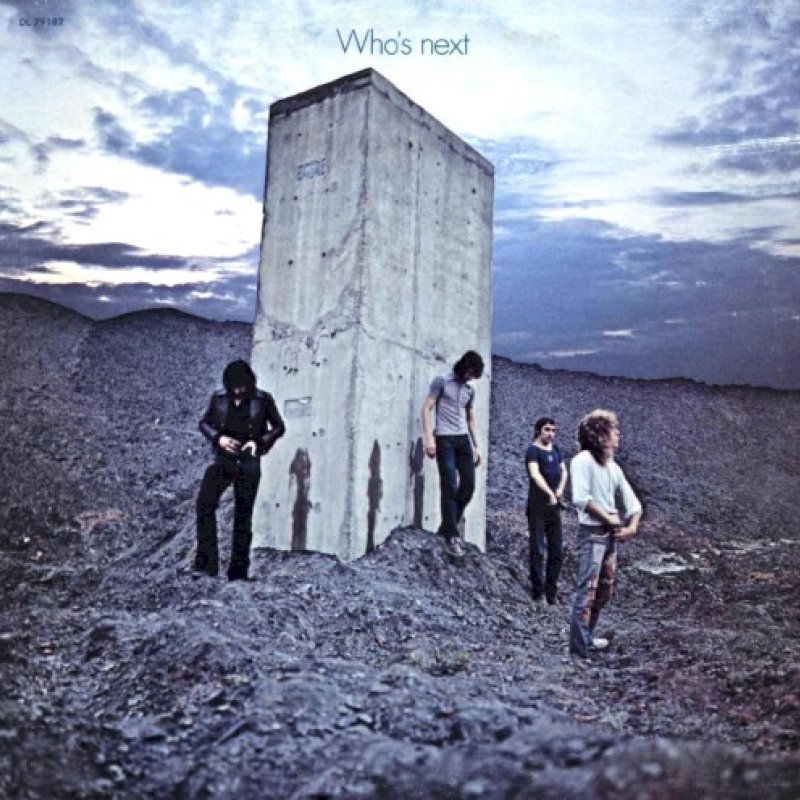
From album

Who’s Next
The Who · 1971 · Track 5
Details
Credits
Lyrics Pete Townshend
Music Pete Townshend