The story behind
Rock‐A‐Beatin’ Boogie, according to DoReSol
This song wasn’t born as just another track on an album, but as the sound that helped define what rock and roll would be in the 1950s. Rock‐A‐Beatin’ Boogie is one of those cuts that, when it plays, leaves no choice but to move your feet: the bass and drums lay down an insistent, almost hypnotic rhythm, while the guitar and piano weave together in a dialogue that feels improvised yet is meticulously calculated. What’s most striking isn’t just its energy, but how that accelerated beat—which in other genres might sound chaotic—here feels natural, as if the song had always existed and was merely waiting for the right moment to hit the dance floor. The detail that surprises most when playing it is that *shuffle* that runs through the entire track: it’s not a flat rhythm, but a cadence that ebbs and flows, like a sway that drags the listener mercilessly.
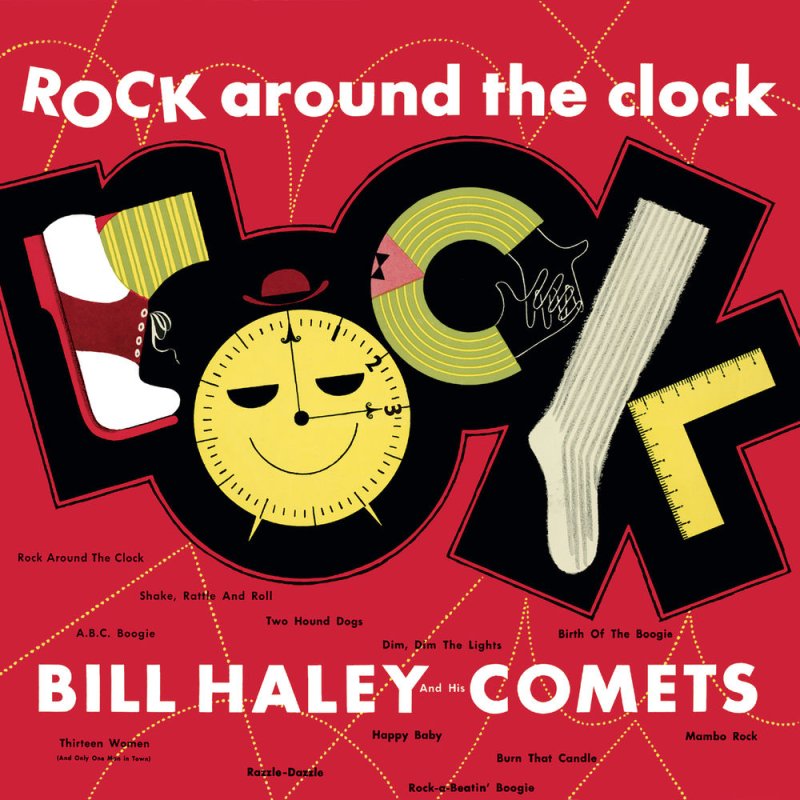
They recorded it in 1955, just as Bill Haley and his The Comets had already made it clear they weren’t a passing fad. The song appeared on the album Rock Around the Clock, released by Decca Records in December of that year, but in reality it was a track that had already circulated in other formats: eight of the twelve songs on the album had been singles released months earlier under the title Shake, Rattle and Roll. The difference here is that, for the first time, a rock and roll album managed to enter the Billboard charts, something uncommon at the time. It wasn’t an experiment: it was confirmation that this sound, which many still saw as marginal, could also win over the mass audience. And while the success came later with the album’s namesake title, this track already carried the seed of what the future of the genre would be.
From album

Rock Around the Clock
Bill Haley and His Comets · 1956 · Track 12
Details