The story behind
Il ragazzo della via Gluck, according to DoReSol
The song Il ragazzo della via Gluck transports us to a vivid memory of Adriano Celentano's childhood and adolescence. The theme revolves around the street where he grew up, Via Cristoforo Gluck, in the Ponte Seveso neighborhood of Milano. Through its verses, one can sense a deep nostalgia for a past time, for that world that fades away when life forces a move, in this case, to live with his brother in the city center. An interesting detail is the temporal reference in the lyrics: "passano gli anni, ma 8 son lunghi", which marks the distance from when Celentano began his recording career in 1958 until the release of this song in 1966.
This track, presented as a folk-inspired ballad, marked a turning point in Celentano's career. He left behind his "urlatore" image to explore deeper sounds and themes, including an early environmental awareness that would resonate in many of his later works. Curiously, this song was chosen to represent Celentano at the 1966 Sanremo Festival, instead of Nessuno mi può giudicare. Although the public initially did not seem to connect with it, leading to its elimination after the first night, the single achieved immediate sales success, reaching second place on the Italian charts and becoming one of the best-selling songs of 1966. This boost led Celentano and his label, the Clan, to release an album with the same title. The song became a benchmark in his repertoire, not only for its autobiographical nature but also for introducing environmental themes, which Celentano would revisit in songs like Mondo in mi 7a, Sognando Chernobyl, Svalutation, and Aria... non sei più tu, among many others. To capitalize on its popularity, the group I Ragazzi della Via Gluck was formed, supporting Celentano as his backing band between 1966 and 1978. The enduring resonance of Il ragazzo della via Gluck is evident, appearing in numerous Celentano compilations such as Me, live! (1979), Le volte che Celentano è stato 1° (2003), and Tutte le migliori (2017). In his performance of this song, Celentano showcases two of his distinctive traits: the alternation between high and low vocal tones to surprise the listener, and a clever recreation of sounds tied to the lyrics, such as the whistle of a train using a slide whistle, aiming to immerse the listener in the narrative.
From album

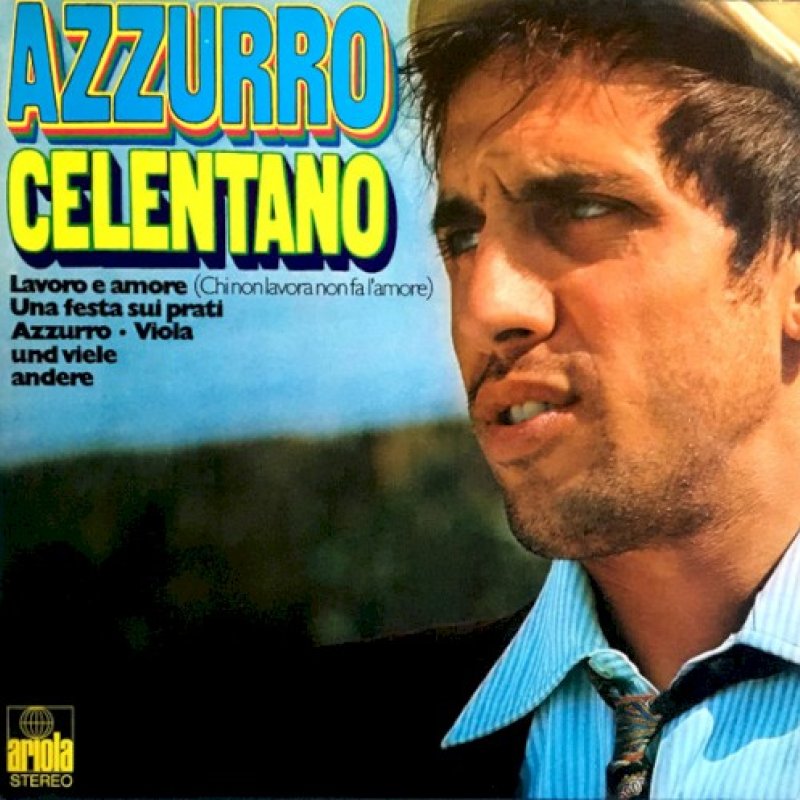
Azzurro
Adriano Celentano · 1971 · Track 14
Details
Credits
Music Adriano Celentano