Chords in progress
We have not analyzed this song audio yet. Once it is ready, you will see the chord player synced with the video.
The story behind
De música ligera, according to DoReSol
The foundation of De Música Ligera was conceived almost spontaneously, emerging during a soundcheck at a concert in Mexicali, Mexico, in 1989. There, the band began to explore a four-chord sequence that would become the heart of the song. Gustavo Cerati, with clear intuition, felt that this harmonic pattern, with its particular Sol-Re descent in the middle of each verse, possessed the potential to connect with a large audience. The lyrics, which speak of the search for a composition with mass appeal, seem to reflect that conviction. The title itself, De Música Ligera, evokes a collection of records from Cerati's adolescence, suggesting a connection to the musical roots that influenced the entire sound of the album Canción Animal.
This track, released in the first half of 1990 as the first single from Canción Animal, became a milestone for Soda Stereo. Its structure, centered on that distinctive riff and chord sequence (Bm, G, D, A), gives it a particular strength. The way the harmony descends in the middle of each phrase, rather than at the beginning or end, creates an irresistible asynchronous quality. It was the song chosen to close El Último Concierto, a highly emotional moment where Cerati uttered the iconic "¡Gracias... Totales!". The impact of De Música Ligera is reflected in the accolades it has received, ranking among the best songs of Ibero-American and Argentine rock according to various publications.
From album

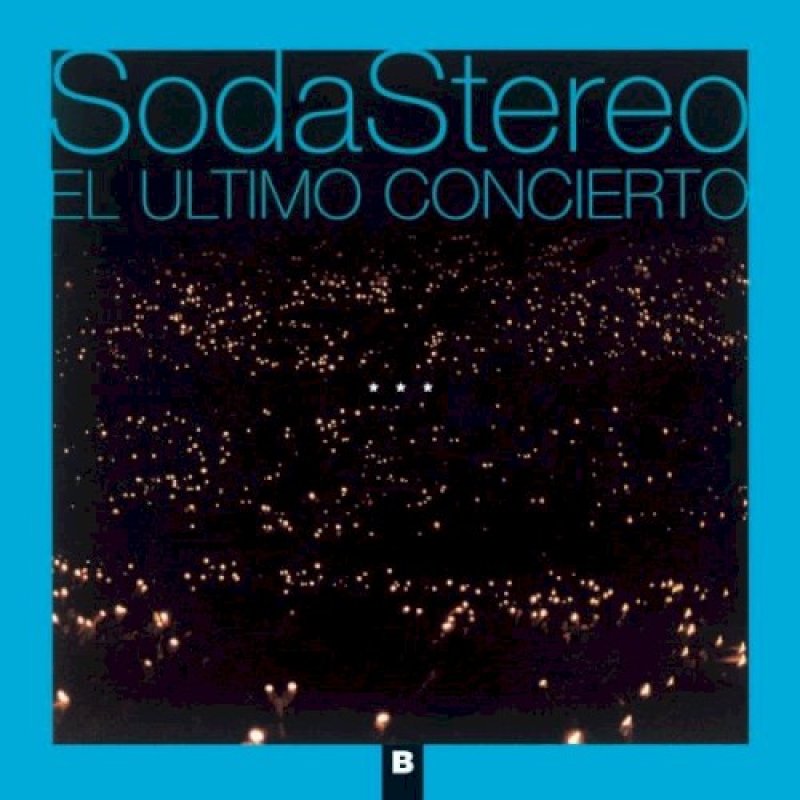
El último concierto B
Soda Stereo · 1997 · Track 11
Details
Credits
Lyrics Gustavo Cerati
Music Zeta Bosio, Gustavo Cerati