The story behind
Cheek to Cheek, according to DoReSol
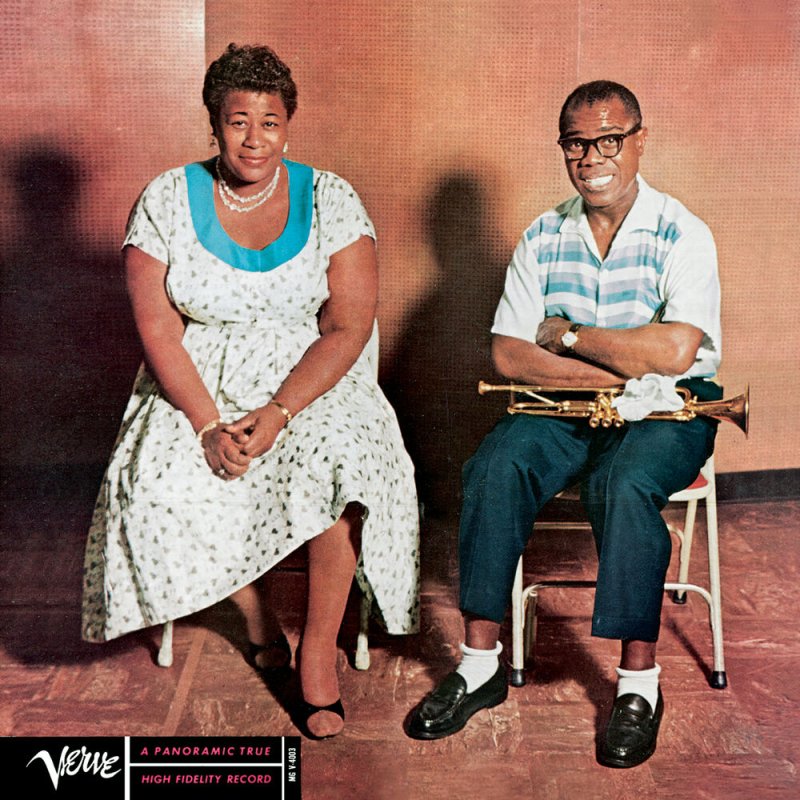
Cheek to Cheek is not just a song, it is a dialogue where two voices intertwine as if time itself had stopped. Recorded in August 1956 at the newly opened Capitol Studios in Hollywood, this three-minute and forty-eight-second piece captures something intangible: the chemistry between Ella Fitzgerald and Louis Armstrong. There is no rush in their performances, only a play of nuances where each note seems crafted for the other to respond. The songbook of Cole Porter —the song's author— is dressed here in elegance without losing its essence, and the arrangements by Paul Weston provide a framework where swing and melancholy balance naturally. The magic lies in how both singers turn an apparently simple lyric into a moment of absolute intimacy, as if every word belonged solely to them.
This album, Ella and Louis, was born under the watchful eye of Norman Granz, the visionary behind Verve Records. Granz not only selected eleven ballads for the project but also let Armstrong have the final say on which songs to record and in what key. The session at Capitol Studios —with Val Valentin at the controls— was not just about capturing a track but preserving the chemistry they had already demonstrated in the 1940s with Decca. The result was so strong that the album spawned two sequels: Ella and Louis Again the following year and Porgy and Bess in 1959. Yet Cheek to Cheek stands out because, beyond the accolades —such as the thirteen Grammy Awards Ella received throughout her career— what endures is the feeling that, for those three minutes and forty-eight seconds, jazz and popular song fused into something unique.
From album

Ella and Louis
Ella Fitzgerald · 1956 · Track 9
Details
Credits
Lyrics Irving Berlin
Music Irving Berlin