


🇯🇲 JM · Jamaica · Chapter 3 of 5
The Dub: When the Studio Became an Instrument (1968–1985)
A finales of the 1960s, in Duke Reid's studio in Kingston, a sound system operator named **Rudolph "Ruddy" Redwood** was preparing a work copy of a song for his system. By mistake — or perhaps not entirely by mistake, nobody remembers it with certainty — he left the vocal tracks silenced during playback. What came out through the speakers was only the rhythm: the bass, drums, guitar, organ, without any vocals on top.

The people in the study remained quiet. Something about that music without lyrics, that exposed skeleton of rhythm, worked in a way that nobody had anticipated. The bass sounded deeper. The space between the instruments was more audible. The music had a new dimension that the sung version didn't have.
Redwood played that voiceless tape on his sound system and it was an immediate response. The crowd danced with a different intensity — as if the absence of the voice, instead of taking something away from the music, added space for the body to complete it.
That was the beginning of dub. And what started as a technical accident in a Kingston studio became Jamaica's most radical musical innovation — even more radical than reggae, because dub wasn't a new genre but a completely new way of understanding what music is and who makes it.
The Mixing Desk Revolution
Before dub, the work of the sound engineer was technical: capturing the sounds that musicians produced, balancing them, recording them. The engineer was a servant to music, not a creator.
Dub completely reversed that hierarchy.
What King Tubby and Lee "Scratch" Perry did in the 1970s was to show that the mixing desk was a musical instrument — perhaps the most powerful that existed, because it could transform retrospectively everything that other instruments had played. The engineer did not record music: he built it. Deconstructed it. Reconstructed it. Took the recorded tracks and manipulated them in real time with the same creativity that a guitarist improvises a solo.
The specific techniques they developed — the echo that repeats and fades, the reverberation that turns a dry note into a cathedral of sound, the delay that creates ghosts of the instruments, the voice elimination in the middle of a phrase so that silence can speak, the filters that transform the timbre of an instrument until it becomes unrecognizable — became the vocabulary of all the electronic music that came after.
Jamaican dub invented the remix. It invented the culture of the producer as an artist. It invented the idea that a recording is not a finished object but a material that can be manipulated, deconstructed and reinvented indefinitely. All of that in Kingston, in the early 1970s, with home-made analog equipment and a creativity that more than compensated for the technical limitations.
King Tubby: The Engineer Who Invented the Future
Osbourne RuddockKing Tubby — was born on January 28, 1941 in Kingston. He was not a musician. He was an electronics technician: since a teenager he repaired radios and amplifiers in the Waterhouse neighborhood, in west Kingston. His knowledge of analog electronics was deep and practical — he knew exactly what each transistor and each capacitor did in an audio circuit — and that knowledge allowed him to build and modify equipment that no one else had.
In 1968 he built his own sound systemKing Tubby's Home Town Hi Fi — which quickly became one of the most respected in Kingston, not for the volume but for the quality of the sound. And he began working as a disc cutter at Treasure Isle, the label of Duke Reid, where he had access to all the master tapes of the reggae recordings of the time.
With those tapes he started experimenting. The techniques he developed seem simple in description but are extraordinarily difficult to execute well: lowering the voice fader at the exact moment to let the silence create tension, adding echo to the kick drum so that the reverb fills the rhythmic space, using the low-pass filter so that the instrument changes timbre in the middle of a phrase. None of these operations were automated: Tubby performed them in real time, with his hands on the controls, like a musician plays an instrument.
His most famous track"King Tubby Meets Rockers Uptown" (1974), a collaboration with the melodicist Augustus Pablo based on a Jacob Miller track session with the Wailers' drummer Carlton Barrett — is a complete demonstration of his technique: the drums appear and disappear, Pablo's melodica floats over chasms of silence and reverb, the bass emerges from the bottom of the mix as something alive and subaquatic. It was music that no one had heard before and contained the DNA of everything that electronic music would do in the next fifty years.
King Tubby was shot dead in front of his house in Duhaney Park, Kingston, on February 6, 1989, on his way back from a late-night session in his studio. He was forty-eight years old. The crime was never solved. His protégésKing Jammy and the incomparable Scientist — continued and expanded his legacy.
Lee "Scratch" Perry: The Shaman of the Black Ark
If King Tubby was the scientist of dub — methodical, technical, preciseLee "Scratch" Perry was his shaman: an eccentric genius, unpredictable, spiritual, who used the studio as if it were a magical ritual and produced music that sounded as if it came from another world.
Rainford Hugh Perry was born in Kendal, Jamaica, in 1936. He worked for Coxsone Dodd in the sixties as a record promoter and talent agent before going independent as a producer. His most extraordinary period was the time he spent at the Black Ark Studio — a four-track studio that he literally built with his own hands in the backyard of his house in Washington Gardens, Kingston — between 1973 and 1979.
In that small and improvised studio, Perry produced some of the most important reggae and dub records: the first Wailers albums with Marley ("Soul Rebels", "Soul Revolution"), the albums of Max Romeo, of Junior Murvin, of The Congos — and his own dub albums that took sonic experimentation to territories that even King Tubby had not explored.
His technique was different from Tubby's: where Tubby manipulated the mixes with surgical precision, Perry added layers of noise, distortion and unexpected sound elements — reversed recorded voices, animal noises, fragments of conversation, rhythmic hits on domestic objects — that created a dense and almost psychedelic texture. Perry buried tapes in the garden of Black Ark, let them fill with soil and moisture, and used them in the mixes to obtain textures that no signal processor could reproduce. He wrote messages on the walls of the studio. He spoke to the equipment as if they were living entities.
In 1979 he burned down the Black Ark. The reasons never became completely clear — he spoke of demonic forces that had contaminated the space, of betrayals by artists who hadn't paid him, of a need to destroy in order to be reborn. The most important studio in the history of Jamaican dub disappeared in the flames of the mind of its own creator.
Perry continued producing until his death in August 2021, at the age of eighty-five. In his later years he lived in Switzerland and recorded with artists from all over the world — the Beastie Boys, Keith Richards, Adrian Sherwood — who sought him as the living origin of something that modern music could not produce on its own.
Dub Travels Around the World
The influence of Jamaican dub spread from the island through two main routes.
The first was the Jamaican community in Britain: the Caribbean immigrants who brought the sound systems to Brixton, Notting Hill and Saint Pauls in Bristol in the 1970s. The 2 Tone and post-punk British scenes absorbed dub directlyPublic Image Ltd. of John Lydon, The Pop Group, Massive Attack and Portishead from Bristol: all have Jamaican dub in their deepest DNA.
The second was the connection with hip-hop in New York: DJ Kool Herc — the Jamaican from Kingston who invented hip-hop in the Bronx in 1973 — took with him the techniques of the sound systems and the DJ culture he had absorbed in Jamaica. The practice of extending instrumental breaks from records, of manipulating two copies of the same vinyl simultaneously, of creating new versions of existing songs: all of that came directly from what Tubby and Perry had invented in Kingston.
The techno of Detroit, the drum and bass of London, the dubstep, the trip-hop: each of these genres has a direct lineage from Jamaican dub. Electronic music of the 20th century would not have been possible without what a radio repairman from Waterhouse discovered while playing with tapes in a home studio in Kingston.
Editor's note: Lee "Scratch" Perry burned down the Black Ark in 1979 — the studio where he had produced part of the most important music of the twentieth century. In the years that followed, he explained the act in different ways in different interviews: sometimes as exorcism, sometimes as liberation, sometimes as madness that he himself acknowledged. What is undeniable is that the studio had already given everything it could give — between 1973 and 1979 Perry had recorded there more important music than most producers in an entire lifetime — and that its destruction was in a certain way coherent with a philosophy that preferred brief intensity to prolonged continuity. As dub itself: everything fades, everything repeats, nothing lasts but everything resonates.
10 · 1 en DoReSol
Top 10 of Jamaican Dub
King Tubby Meets Rockers Uptown
Augustus Pablo & King Tubby · 1976
The most important dub ever recorded. Pablo's melody floating over the sonic architecture of Tubby: five minutes that summarize everything the genre can do.
Blackboard Jungle Dub
Lee Perry & King Tubby · 1973
The first pure dub album in history. Perry and Tubby together at the moment when the two pioneers of the genre coincided: a perfect storm.
Super Ape
Lee Perry & The Upsetters · 1976
Perry at the peak of his powers on the Black Ark. Psychedelic, spiritual and physically powerful at the same time. One of the strangest and most perfect reggae albums.
Dub from the Roots
King Tubby · 1974
Tubby's technique in its purest and most accessible form. The instruction manual of dub presented as art.
Scientist Rids the World of the Evil Curse of the Vampires
Scientist · 1981
The protegé of Tubby taking dub to its second generation: darker, more dramatic, with a conceptual narrative that the original dub didn't have.
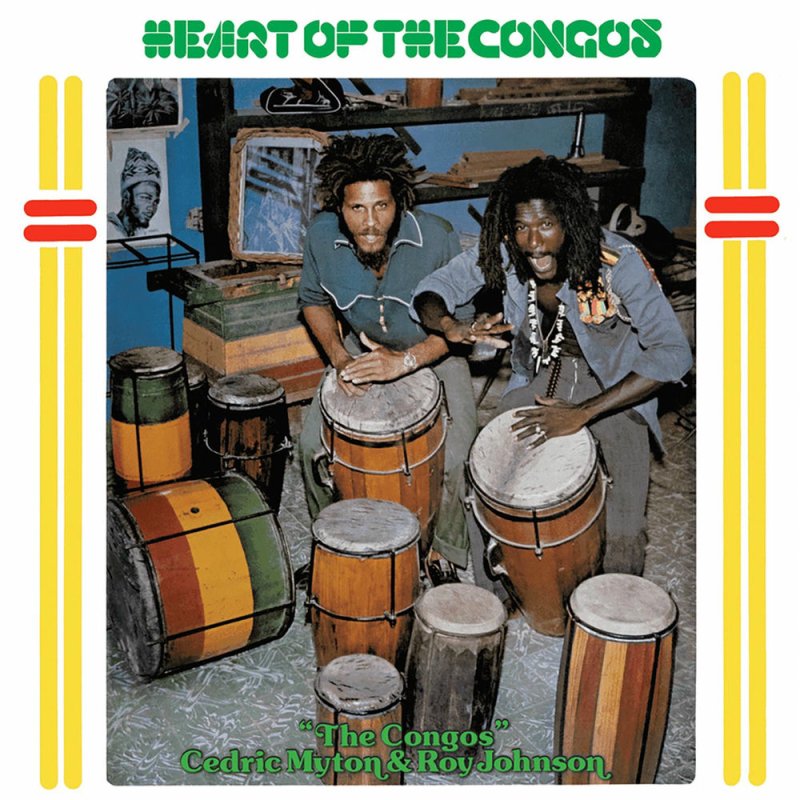
Heart of the Congos
The Congos · 1977
Technically a reggae album, but with Perry's production so experimental that it lives on the border between reggae and dub. One of the most spiritual albums in the genre.
Roast Fish and Cornbread
Lee Perry · 1978
Perry solo at the Black Ark, a year before burning it down. Eccentricity at its peak: impossible sounds, impossible textures, music impossibly good.
Dub Me Crazy
Mad Professor · 1982
The first important dub album recorded outside of Jamaica — in London, by the engineer Neil Fraser. Jamaican dub traveling and transforming.
Africa Must Be Free by 1983 Dub
Hugh Mundell & Augustus Pablo · 1978
Dub as political statement. The message of roots reggae deconstructed and amplified by dub technology: the bass as protest.
Ital Dub
King Tubby & Augustus Pablo · 1975
The first major collaboration between the two masters. Tubby's sonic laboratory and Pablo's spiritual vision producing something neither would have done alone.
The full series
Jamaica
Ska, rocksteady, reggae, dub. The island that changed the world's rhythm.
-
CAP 01
🇯🇲 Ch 01
Ska: The Soundtrack of a Nation That Had Just Been Born (1950–1966)
Jamaica has an area of 10,990 square kilometers — smaller than the
-
CAP 02
🇯🇲 Ch 02
The Rocksteady and the Reggae: The Sound that Conquered the World (1966–1981)
In the summer of 1966, something changed at Kingston studios. Ska — that fast-paced, metal-rich music that had been Jamaica's independence soundtrack — began to slow down. The temp
-
CAP 03 you are here
🇯🇲 Ch 03
The Dub: When the Studio Became an Instrument (1968–1985)
A finales of the 1960s, in Duke Reid's studio in Kingston, a sound system operator named **Rudolph "Ruddy" Redwood** was preparing a work copy of a song for his system. B
-
CAP 04
🇯🇲 Ch 04
The Dancehall: When Kingston Got Electric and the World Started Dancing (1979–2010)
By the end of the 1970s, Kingston was a city at war with itself. Political violence between the two major Jamaican parties — the PNP of Michael Manley and the JLP of Edward Seaga —
-
CAP 05
🇯🇲 Ch 05
The Reggaeton and Global Influence: How a Three Million Island Changed the World Music (1990–today)
In 1990, the Jamaican producer Bobby Digital took a riddim created by the production duo Steely & Clevie — based on a rhythmic pattern from a track by Gregory Peck called "Poc
You might also like
3 articles picked by editorial similarity

The Reggaeton and Global Influence: How a Three Million Island Changed the World Music (1990–today)

The Dancehall: When Kingston Got Electric and the World Started Dancing (1979–2010)
