The story behind
Stars Fell on Alabama, according to DoReSol
The night of November 13, 1833, Alabama was illuminated by a spectacle that became etched in collective memory: thousands of stars streaked across the sky in all directions, unobscured by clouds. Nearly a century later, that image of awe and beauty inspired the title and essence of Stars Fell on Alabama, a song that captures the same sense of wonder in its lyrics. The tune isn’t just about an astronomical phenomenon—it’s about that moment when something extraordinary seems to freeze time. Frank Perkins composed the music in 1934, and Mitchell Parish crafted words that evoke both the sky and memory, as if each note could transport the listener to that night in 1833. The magic lies in how melody and lyrics intertwine to tell something greater than a story: a pure, almost physical emotion that resonates with whoever hears it.
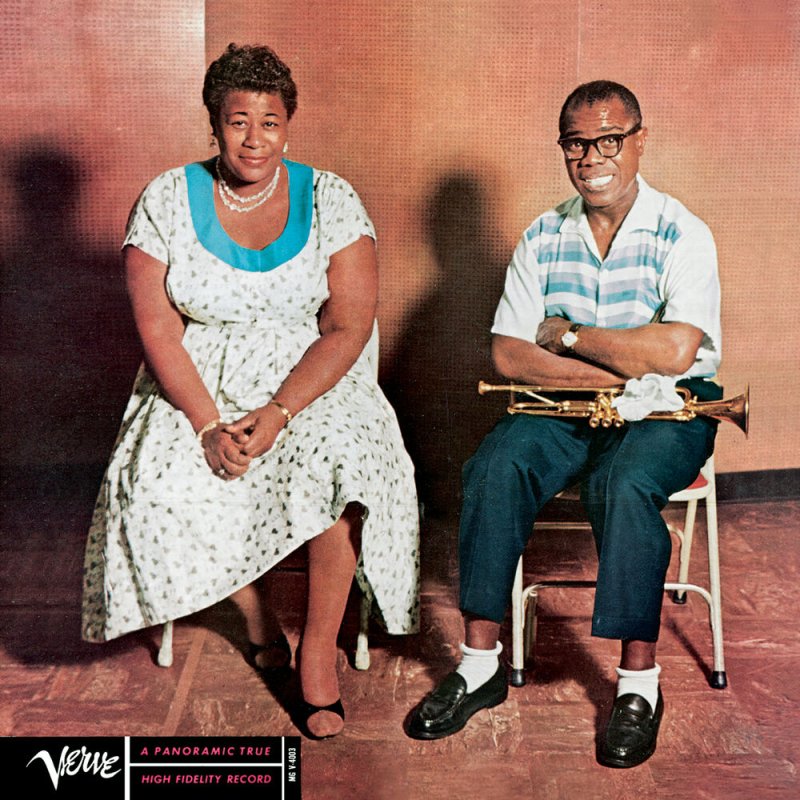
When Ella Fitzgerald and Louis Armstrong recorded their version in 1956, they weren’t just performing a 1930s jazz classic—they were redefining its soul. The album Ella and Louis, produced by Norman Granz, was the first of three collaborations for Verve Records, and within it, the duo transformed Stars Fell on Alabama into something intimate yet epic. The sessions took place at Capitol Studios in Hollywood, where Armstrong had the final say on arrangements and tonalities. Fitzgerald, with her crystalline voice and flawless phrasing, and Armstrong, with his unmistakable timbre that seemed to sing from the depths of the soul, gave the song an emotional weight previous versions lacked. The recording lasts 3:34, but within that time, decades of history unfold: from the colonists’ awe to the swing of the 1950s, all condensed into a ballad that feels both nostalgic and immediate.
From album

Ella and Louis
Ella Fitzgerald · 1956 · Track 8
Details
Credits
Lyrics Mitchell Parish
Music Frank Perkins