The story behind
Sólo le pido a Dios, according to DoReSol
This musical piece, *Sólo le pido a Dios*, with its duration of 4 minutes and 12 seconds, stands as a hymn of deep reflection. Its strength lies not in overwhelming instrumental complexity, but in the pure emotion it conveys. The performance by Mercedes Sosa, often referred to as *La Negra Sosa* or *The Voice of America*, elevates the lyrics to an almost spiritual plane, inviting introspection on the most essential desires. It is a song that appeals directly to the heart, stripped of superfluous adornments, allowing the message and the artist's voice to shine with striking clarity.
Born in San Miguel de Tucumán, Mercedes Sosa (1935-2009) became a central figure in Argentine folk music, transcending borders to be recognized on continents such as Europe, Israel, and East Asia. Her legacy extends throughout Latin America, where she is considered one of the most influential popular voices in the region. She was a pioneer of the *Nuevo Cancionero* and a key exponent of *Nueva Canción latinoamericana*. Although she explored genres such as tango, rock, and pop, she preferred to define herself as a "cantora," a term that resonated with the ideal of song with purpose, as expressed by Facundo Cabral: "A singer is one who can, and a cantor is one who must." This philosophy was reflected in the titles of her albums such as *Canciones con fundamento* (1965) and *Yo no canto por cantar* (1966). Throughout her career, she performed emblematic songs such as *Alfonsina y el mar*, *Gracias a la vida*, and *Todo cambia*, leaving an indelible mark on the history of music.
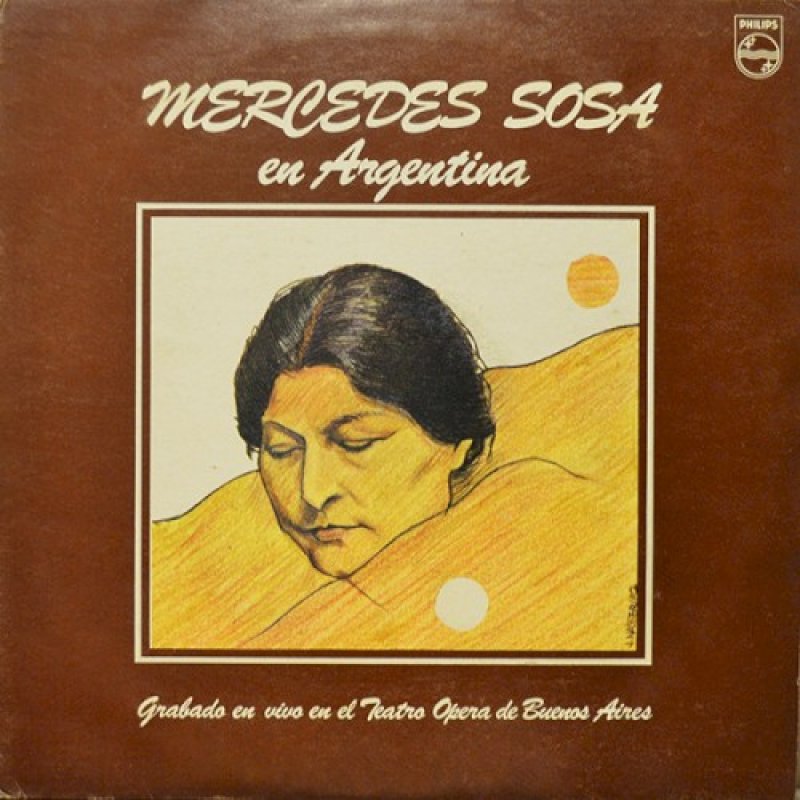
From album

Mercedes Sosa en Argentina
Mercedes Sosa · 1982 · Track 10
Details