The story behind
La bambina (L'inverno è neve, l'estate è sole), according to DoReSol
The song *La bambina (L'inverno è neve, l'estate è sole)*, with its 3-minute duration, is a piece that emerges from a moment of change for Lucio Dalla. In 1973, the Italian singer-songwriter decided to take a turn in his creative process, leaving behind his usual collaborators for lyrics, Sergio Bardotti and Gianfranco Baldazzi. Instead, he turned to the poet Roberto Roversi, a connection that would extend for four years and three albums. This change marked the beginning of a fundamental stage, not only for Dalla but also for Italian music, alongside later works such as *Anidride solforosa* and *Automobili*.
Born in Bologna in 1943, Lucio Dalla developed a career that spanned nearly half a century, exploring from beat sounds to rhythmic experimentation and singer-songwriter music. With a musical background that included jazz, he worked as a clarinetist and saxophonist, and occasionally as a keyboardist. His beginnings as a musician were early, playing the clarinet in a jazz group in Rome, where he shared space with figures like music critic Fabrizio Zampa and comedian Massimo Catalano, with the support of maestro Carlo Loffredo. His vocal style, influenced by the power of James Brown and jazz improvisations, was characterized by sometimes dissonant expressiveness and melodic freedom, something that was also evident in the scat improvisations he practiced, just like Adriano Celentano in his time. It was Gino Paoli who encouraged him to embark on his solo career.
From album

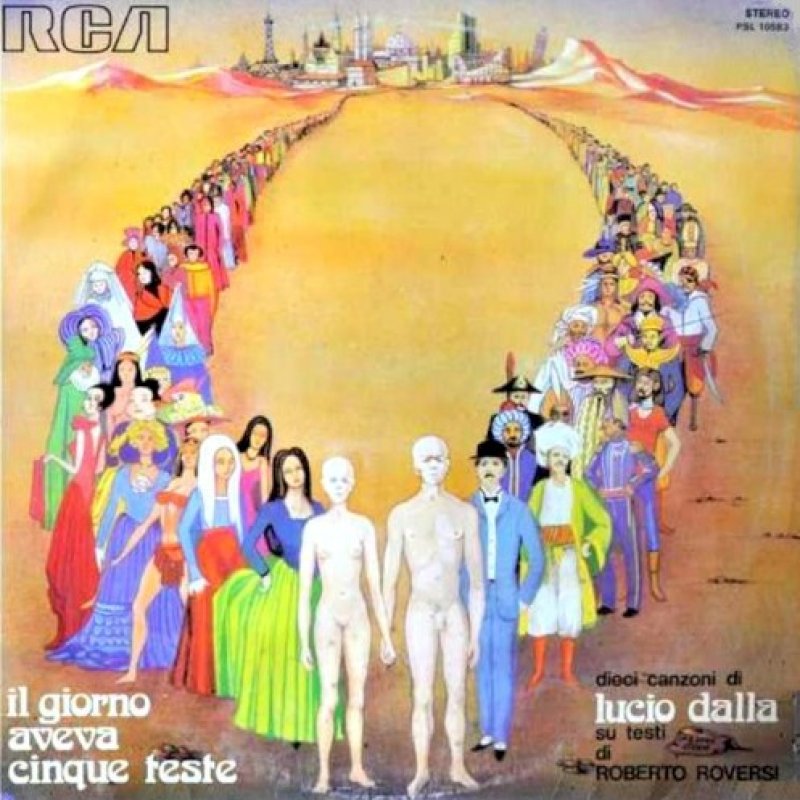
Il giorno aveva cinque teste
Lucio Dalla · 1973
Details