


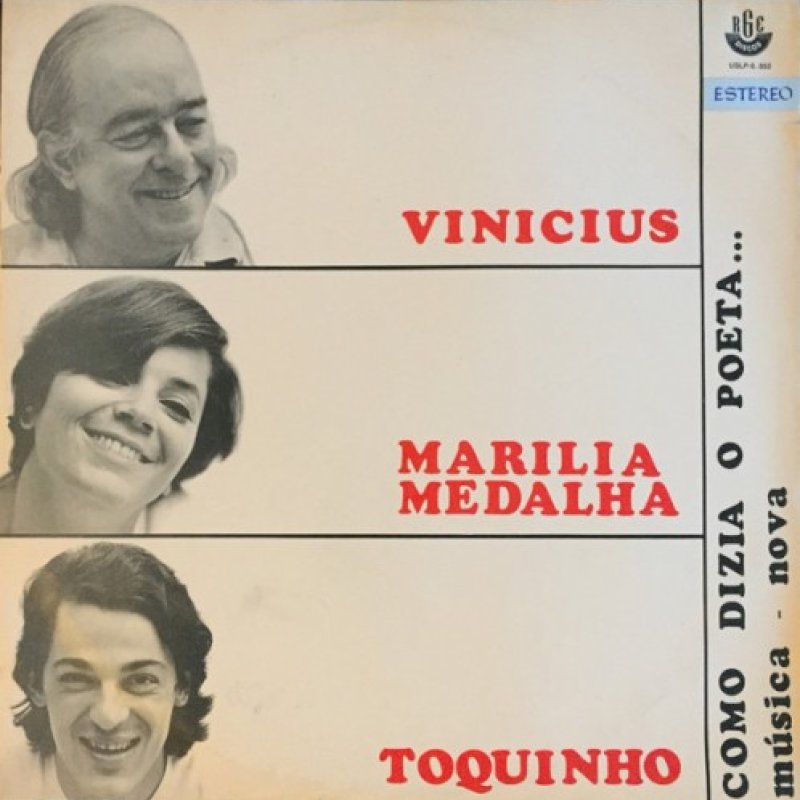
1 album|s · 1971
Full discography
Details, awards, members and more
More about Vinicius de Moraes
Biography
Vinicius knew how to mix the Brazilian with the modern. His lyrics were like a song that gets into your skin. Songs like "Garota de Ipanema" or "Chega de Saudade" became references. Although he wasn't a famous singer, his work was interpreted by artists like Frank Sinatra or Pierre Barouh. His name spread beyond Brazil, and today he remains a symbol of the music and poetry of the country.
As a child he already wrote poetry. At 14 he joined Paulo and Haroldo Tapajós, and together they did "Loura ou Morena". He studied law in Rio, and before finishing, he already had songs recorded by the Tapajós. After graduating, he published some poetry books. He worked as a film censor and wrote more books. In 1938 he went to England, studied at Oxford and wrote a book of poems. He returned to Rio in 1941 and dedicated himself to film criticism. Later he got into diplomacy, went to Los Angeles, published more books and went to France.
In 1950 he returned to Brazil due to his father's death. There he wrote his first samba, "Quando tu passas por mim", which came out in 1953. That year he went to France as an ambassador. His play "Orfeu da Conceição" won a competition in São Paulo. Later, in 1959, Marcel Camus adapted it to film as "Orfeo Negro". It was a key moment, because there he met Antonio Carlos Jobim, and together they started doing new things. Jobim put music to songs that became classics. That film won several awards, including an Oscar. Meanwhile, Vinicius kept moving between countries, writing, publishing and leaving his mark on Brazilian music.
Details
- Nacimiento
- 19 oct 1913
- País
- 🇧🇷 Brazil